Archive for category Europe
The 7 C’s of Switzerland
The Grand Tour of Switzerland is a route mapped out by the tourist board and sounds good but our tour was called The Seven ‘C’s of Switzerland. It was very gentle– we did more miles travelling to/from the start than we did in Switzerland but there again it is a small country! We met up in Neuchatel (near the French border in the north west) after taking the ferry to Hook of Holland and a 500 mile thrash through Holland, Belgium, Luxembourg and France – we had to be there in time for the Welcome Dinner at 7.30! Swiss wine and cheese fondue were on offer and I hadn’t had a fondue since they were all the rage 40 years ago!
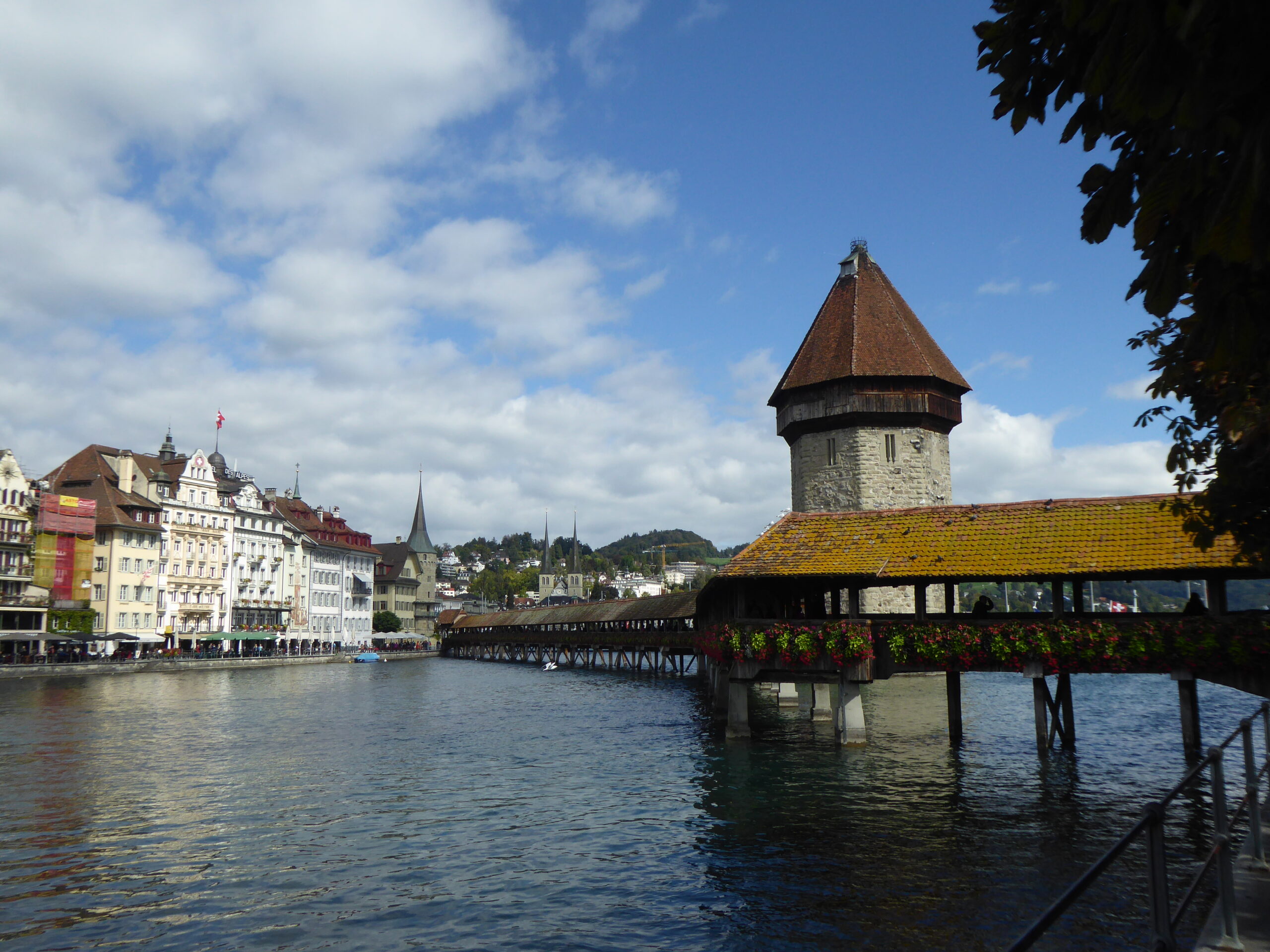
Lucerne Kapellebrucke
There were six cars in the tour but that reduced to five when one couple’s house was broken into and their E type stolen so they hastened home to sort out the chaos. Another was a German speaking Swiss couple who drove a Corvette until that broke down and they switched to a Mustang. I was intrigued by the insight into Switzerland that when they spoke to a waitress in a French speaking area – it was in English!
The tour was a clockwise meander round the centre of the country with plenty of “all you expect” views of Alpine scenery – cows, lakes, vineyards and hills.
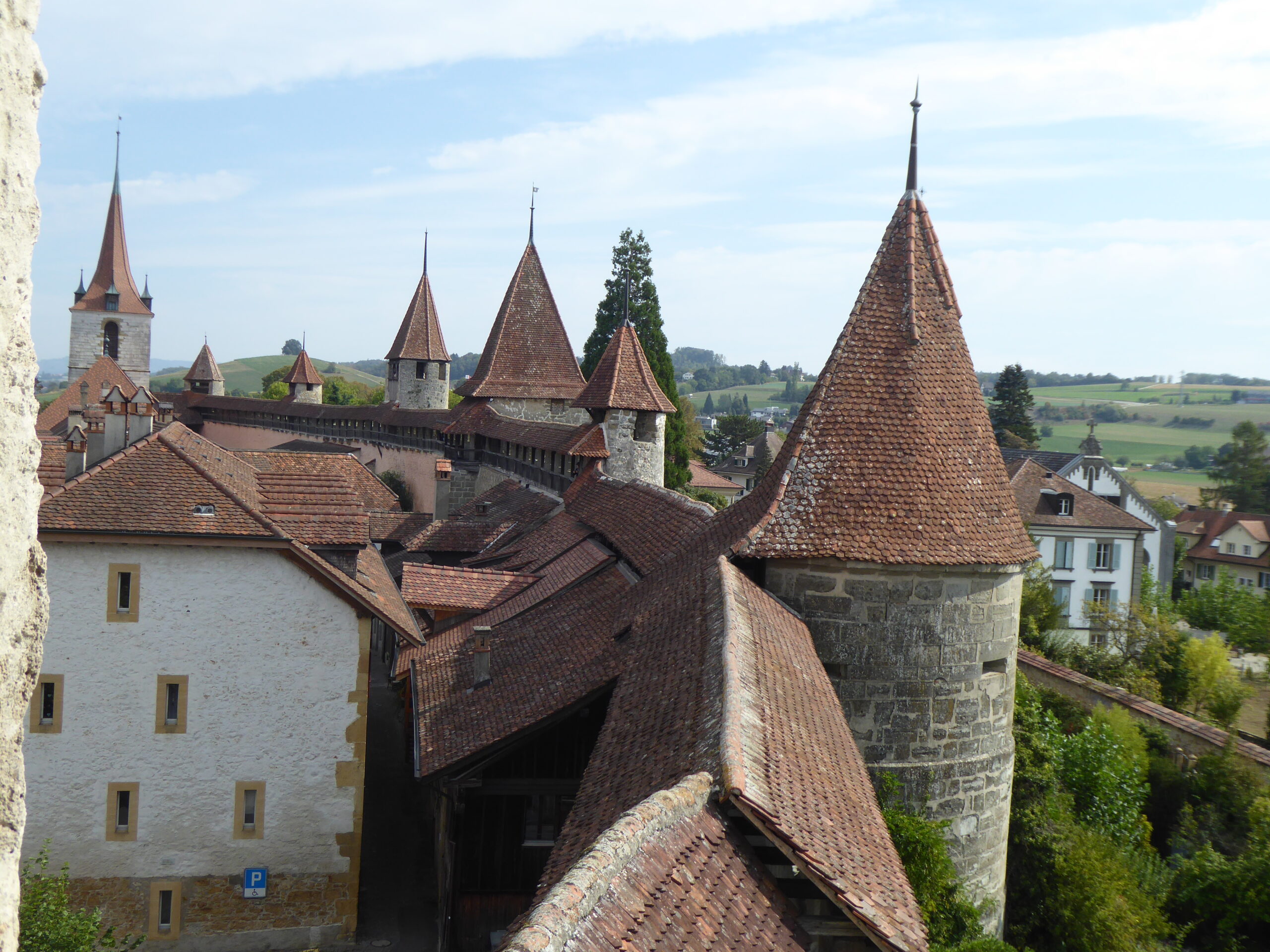
15th Century walls in Murten
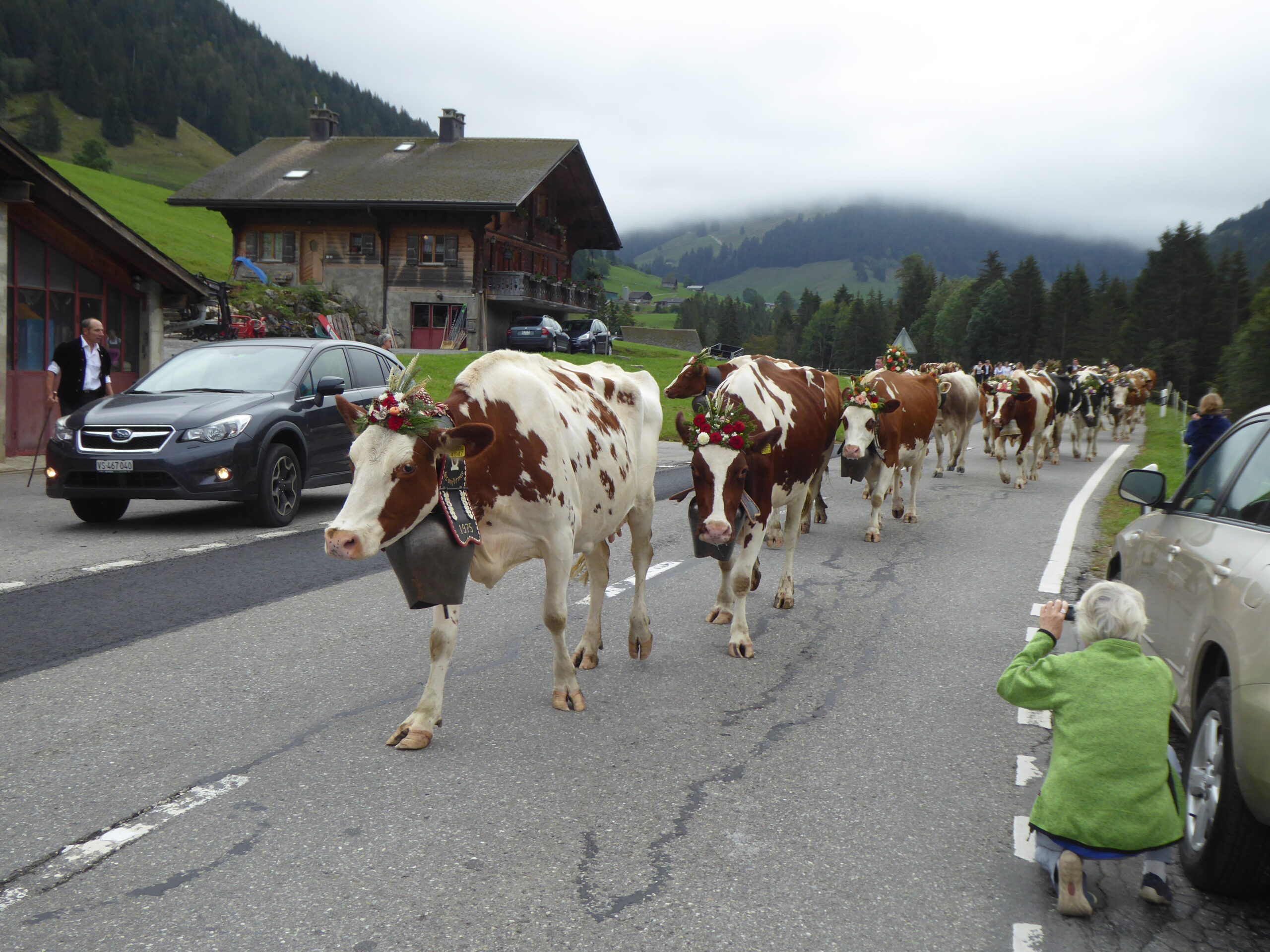
Les Vaches
After cows the next feature was the Schilthorn – scene of James Bond’s On Her Majesty’s Secret Service
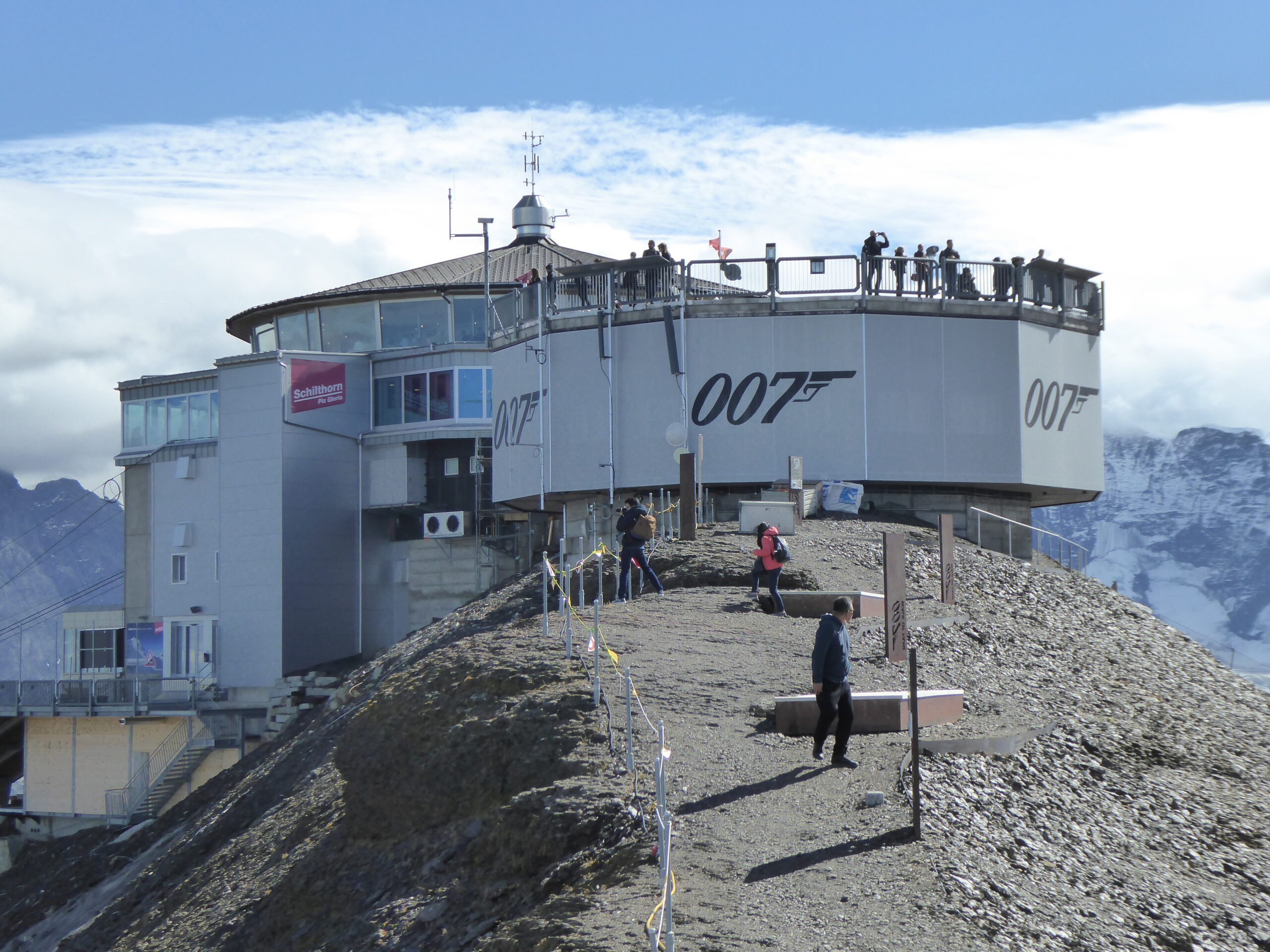
007 Tourist trap
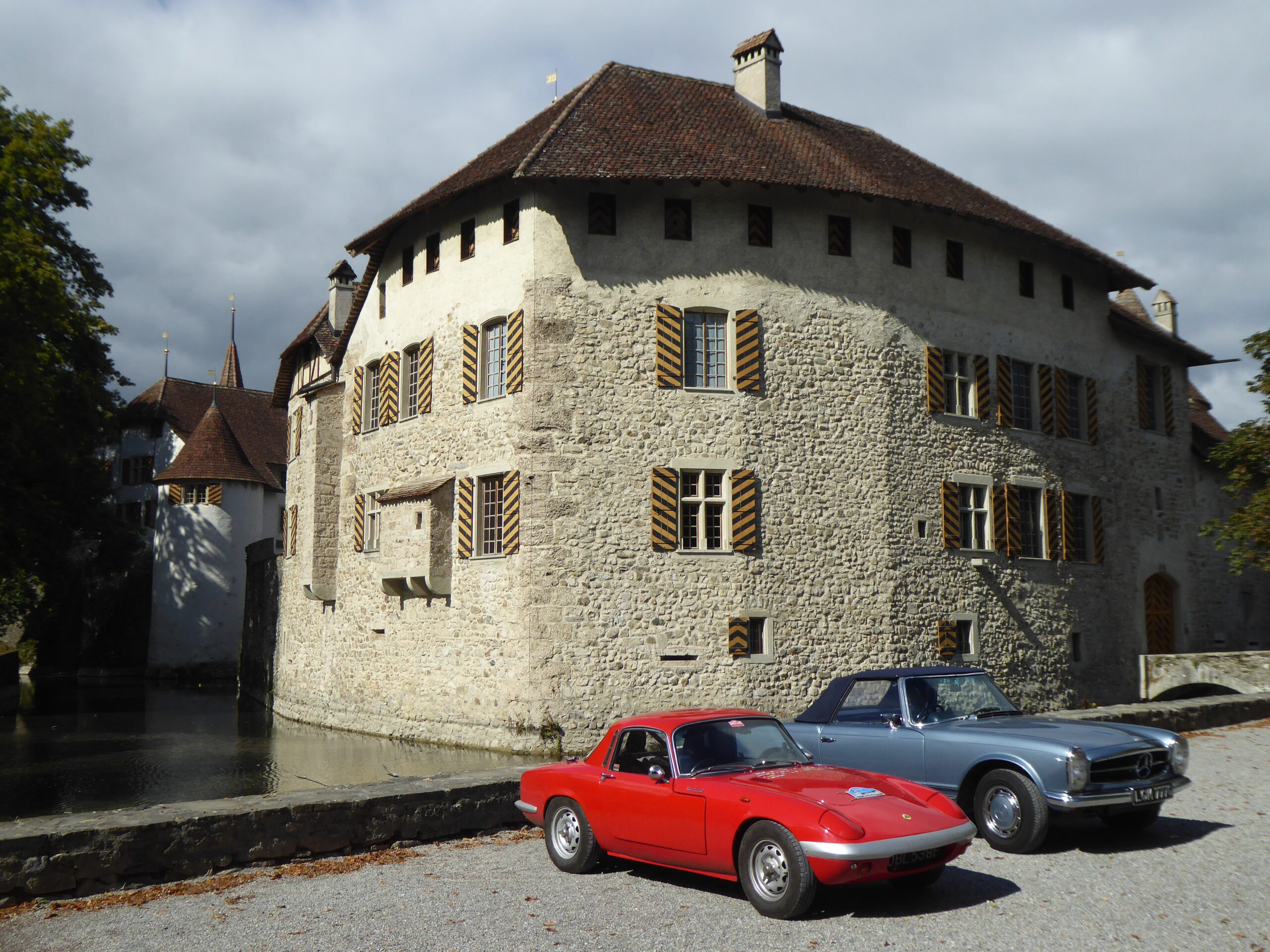
Schloss Hallwyl – water mill – closed Mondays
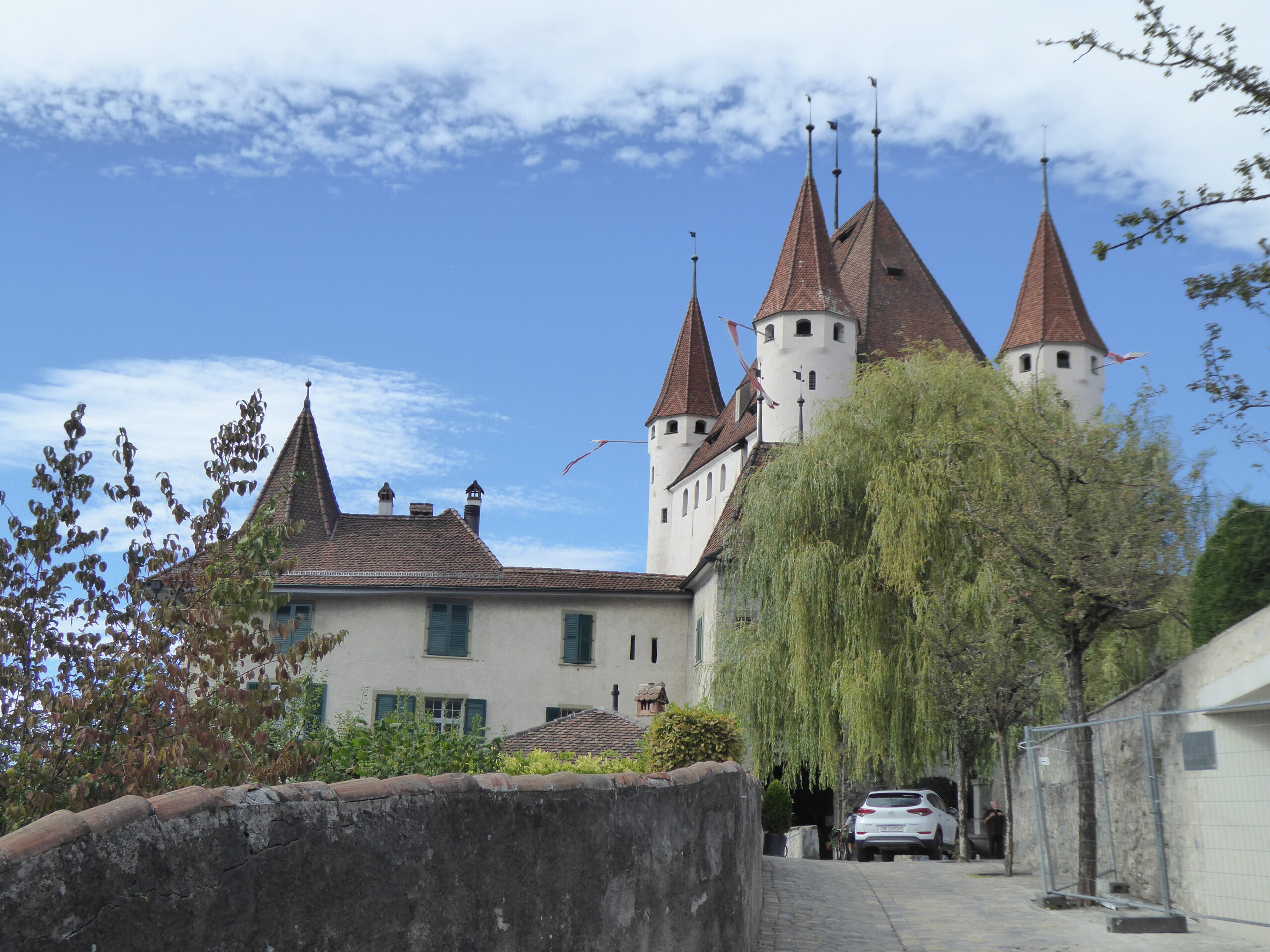
Thun Castle
We spent a day wandering round Lucerne. The size of the Elan not being a relevant barrier, I had to try a different tactic to lure Allison away from the watch shops that comprise most of the shopping opportunities here. The wooden bridges with their painted panels and sculpture of a dying lion seemed to do the trick! The Lion is a memorial to the 786 Swiss guards who died defending Louis XVI and Marie-Antoinette
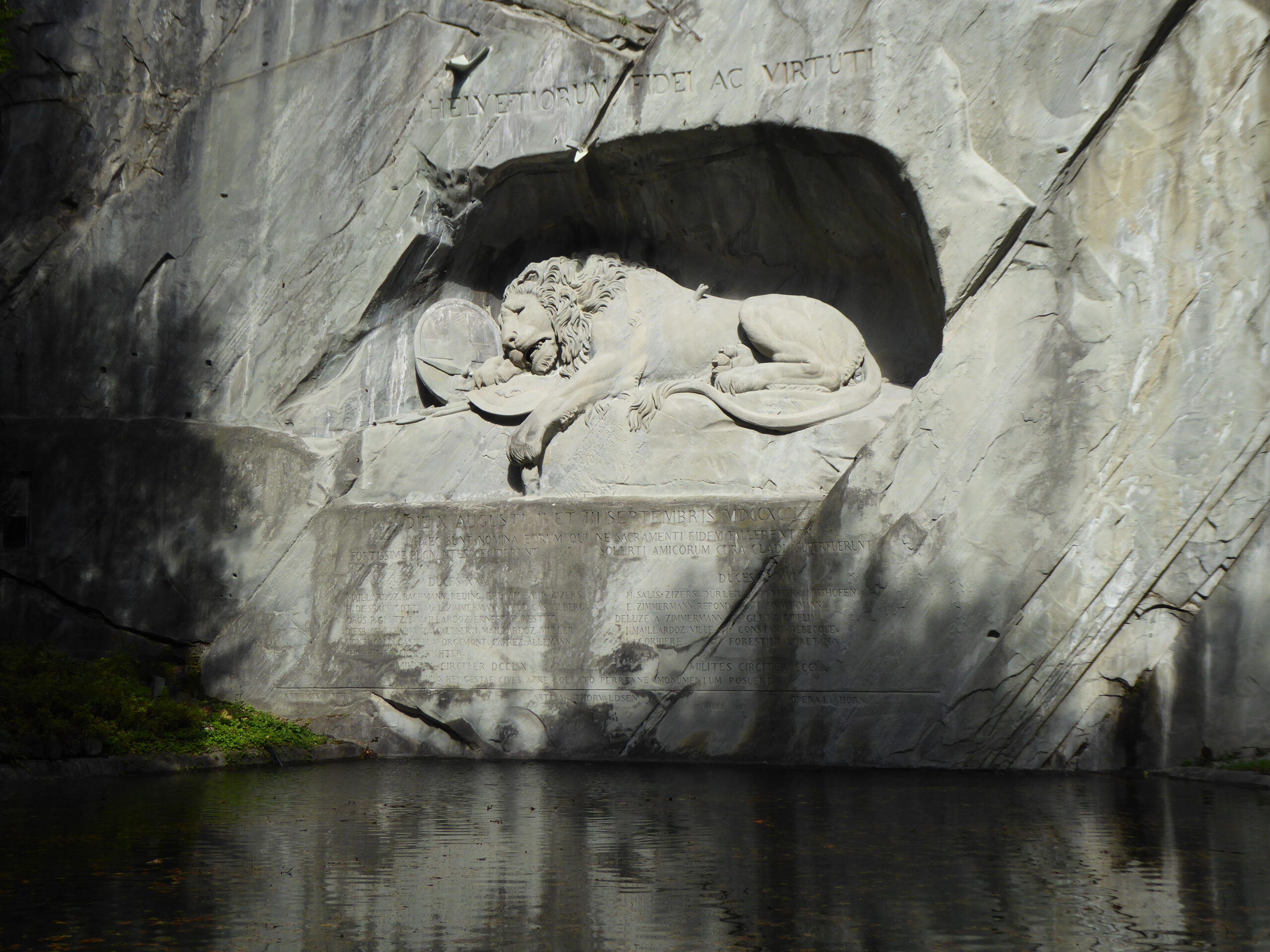
Dying Lion
A guided tour round the Swiss Army Knife visitor centre occupied us before we took the ultra-modern funicular railway to Stoos. The train consists of 4 barrel-like carriages which rotate as they climb so the passengers are always upright despite a gradient of 110%. (48° in old money). Next stop Andermatt and then we had some mountain passes to test us! We started on the Susten Pass, opened in 1945 for tourism and generally the last to be cleared of snow.
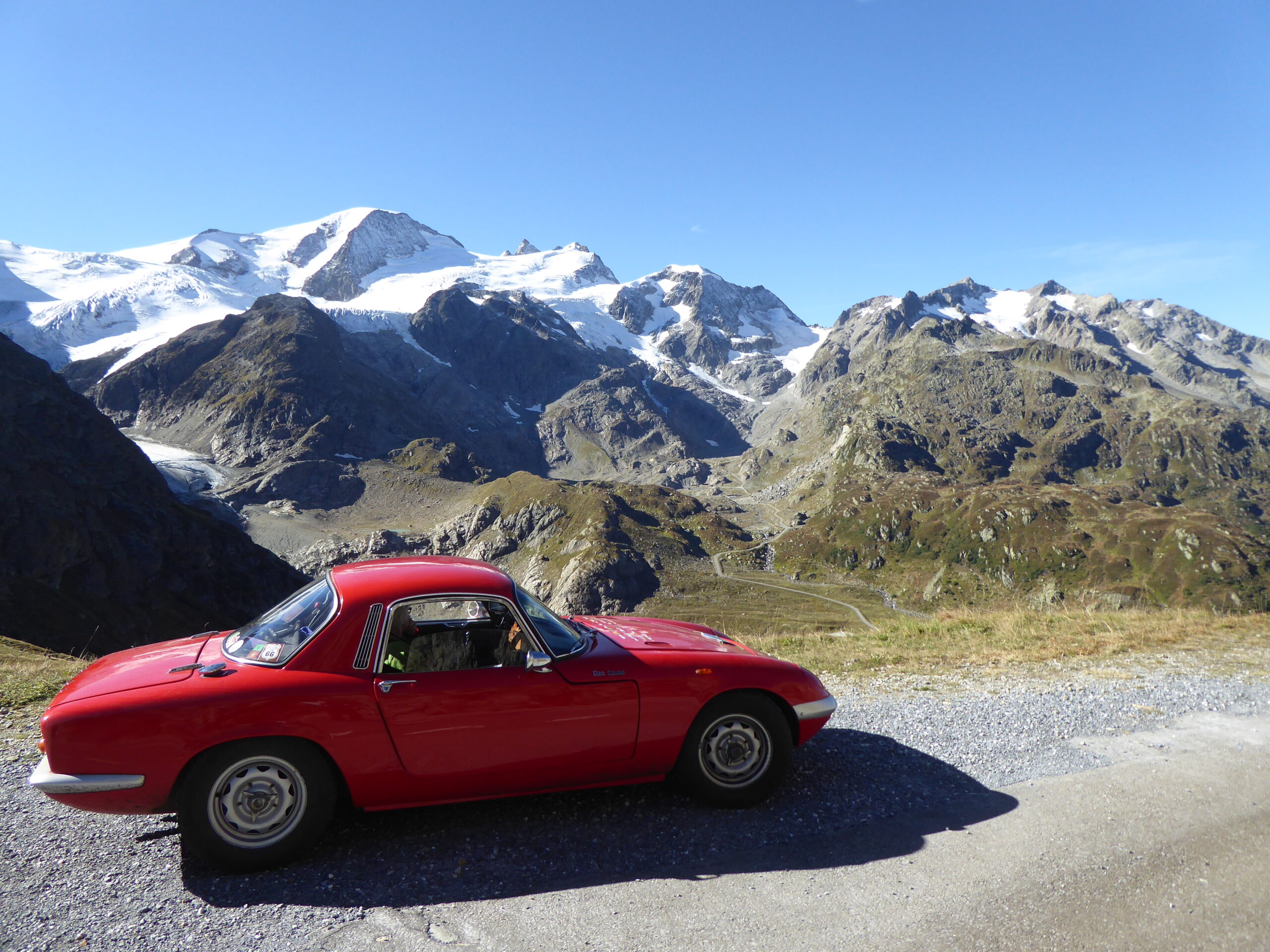
On the Susten Pass
The next pass was the Grimsel, a much narrower road where a black Rolls hooted furiously at our temerity in ascending whilst he was descending, just missing us in the process. We had a choice of routes at Gletsch and took the shorter route via the Furka Pass
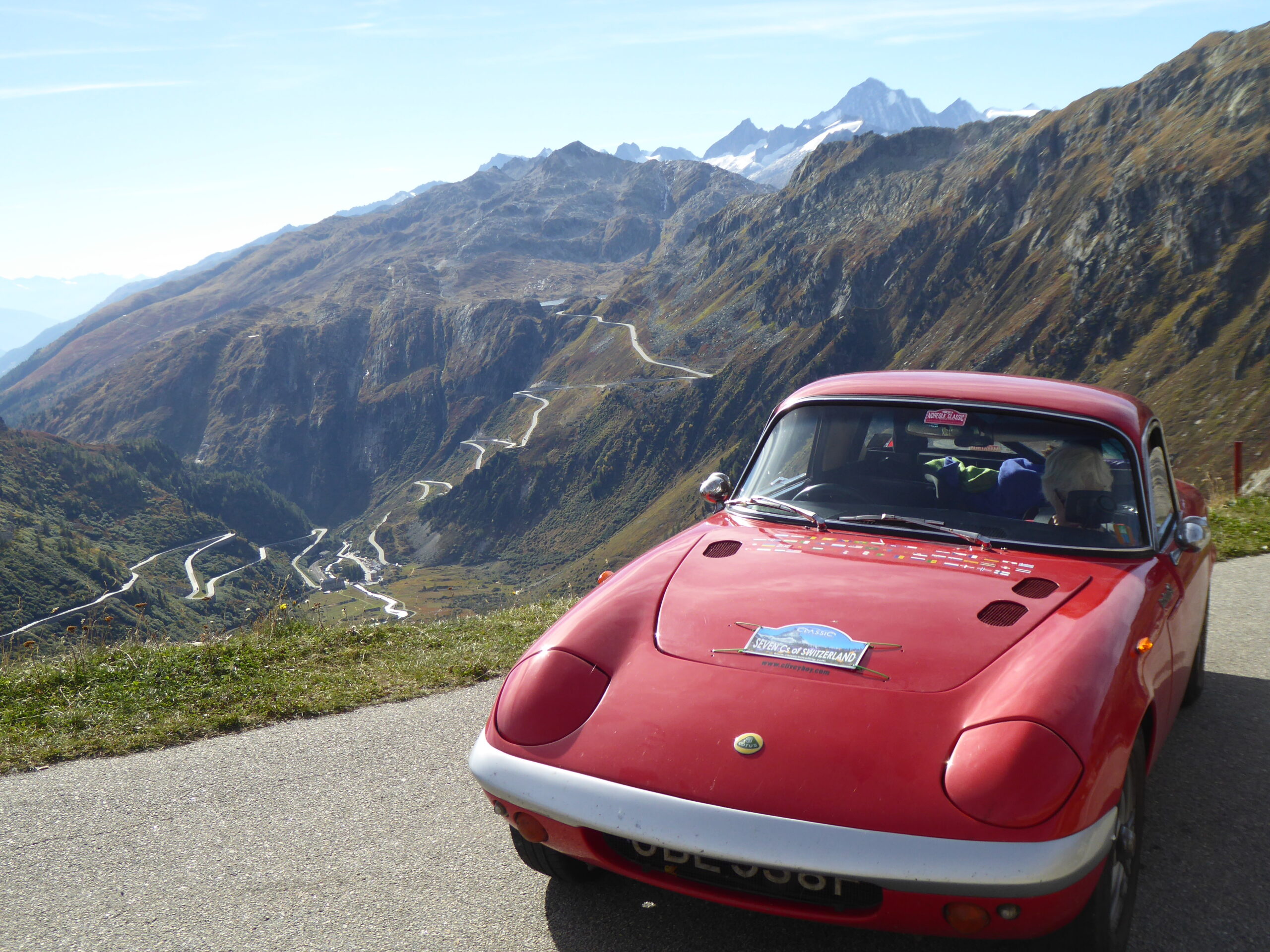
Furka Pass
Day 8 saw us reverse the Furka Pass and this time we stopped to visit the Rhone Glacier, a rather sad lump of ice covered in white sheeting in a vain attempt to reduce the melt. After a rest day in Crans Montana, mainly spent hiking around some expensive ski slopes we found our way to the Chateau de Chillon.
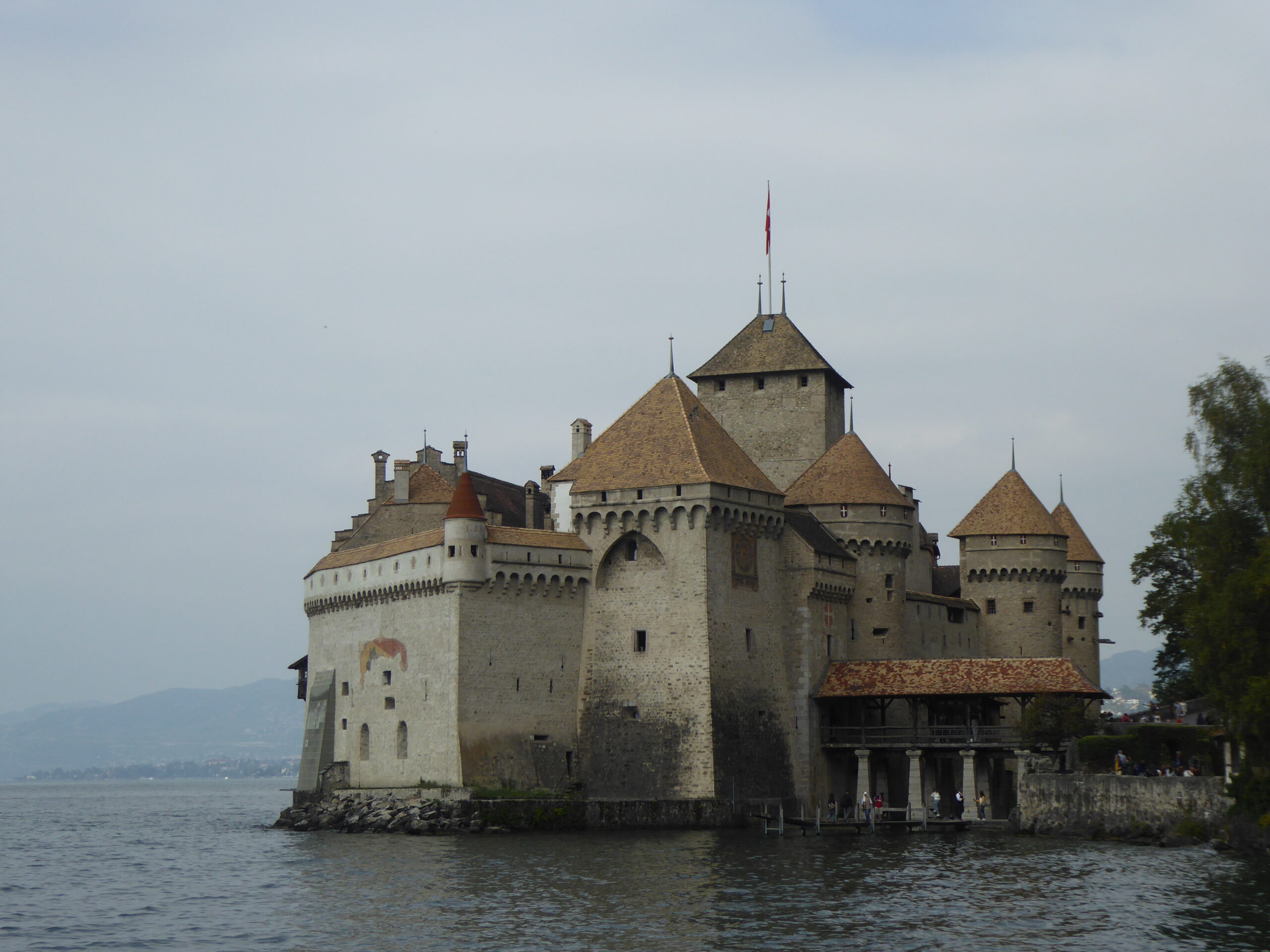
Chillon
Our last day revealed an unexpected treat at the Abbey of Romainmotier.
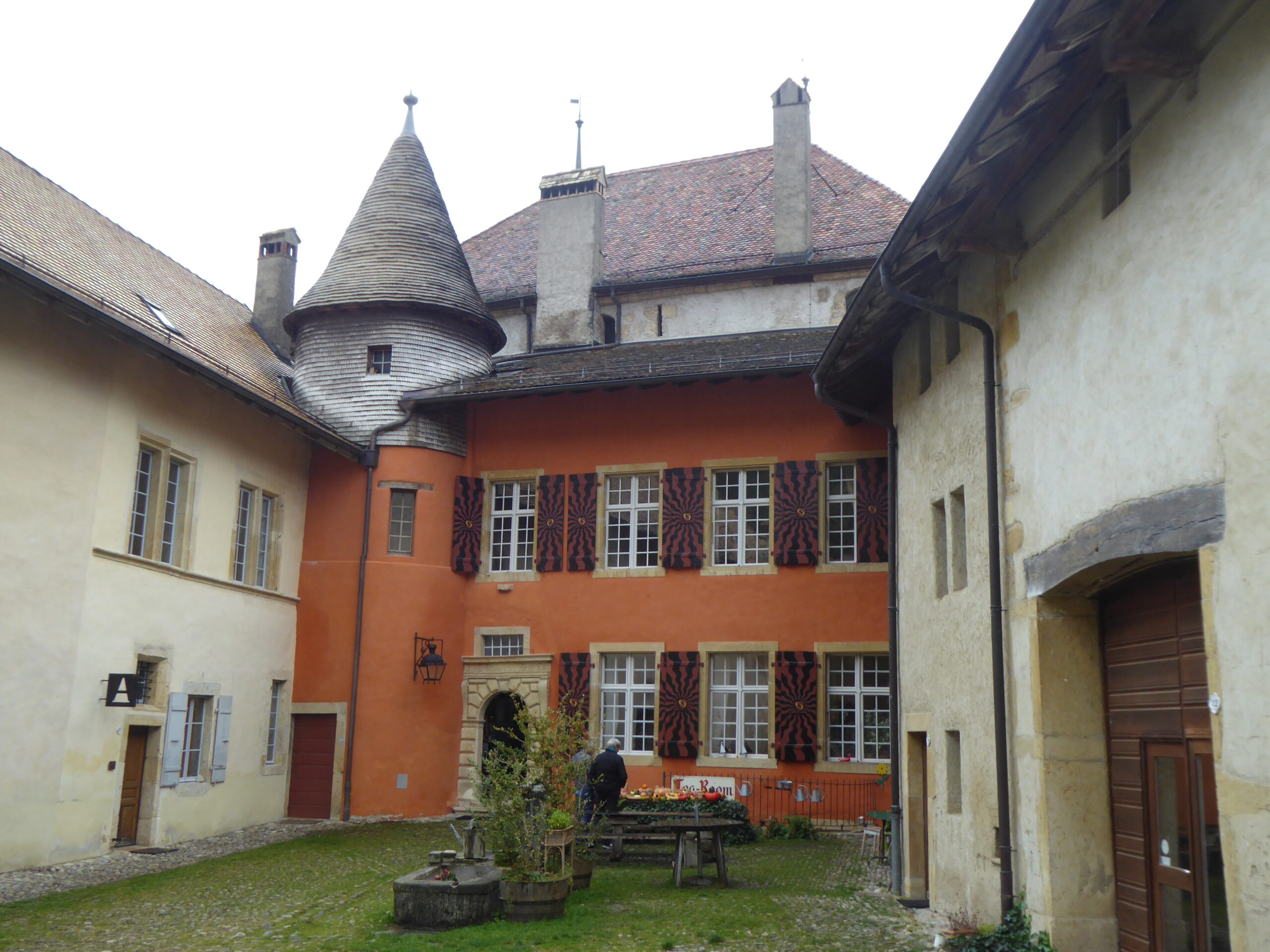
Romainmotier
So what were the 7 C’s? Sarah was reticent on this – what did we want them to be? How about Cantons, Cheese, Chocolate, Cows, Chateaux, Clocks and …. maybe Cuisine?
Arctic Highway Challenge
12 July – we arrive in Travemunde at around 9pm after about 30 hours on a very calm ferry crossing from Helsinki (about 1150 km).
View from our hotel in Travemunde
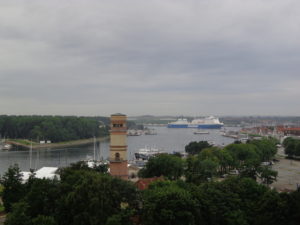
Travemunde harbour
Yesterday was the 300 mile drive to Helsinki, which started on glorious roads – wit no speed cameras! We had some confusion as Allison was adamant that we should be on road number 89 when in fact we were on the 68. Changing the direction of the map made life a little clearer! Sue and Will did a grand tour of Helsinki Old Town before arriving at the port 15 minutes after check in closed.
My first task at the hotel was to change the points – they had been ok but this was a precaution against a breakdown (and losing time) at the side of a German autobahn. Probably a good thing as the set that came out looked pitted with limited life expectancy.
Now 7.00 am local time on 13 July and our incoming ferry has just turned around in the narrow river to start its return to Helsinki. We hope to be on this evening’s boat to Harwich – and more car repairs to look forward to!
10 July – a drive to Kokkola but a late start as our sleep was disturbed by some noisy night clubbers. Yesterday was characterised by a sequence of lakes and evergreens, with the odd speed camera; today in principle we were on the coastal road alongside the Gulf of Bothnia – but I didn’t see any sea – I saw plenty of speed cameras. They were everywhere – grey boxes with two lenses and you had no idea what they were thinking! The car ran happily enough. Kokkola
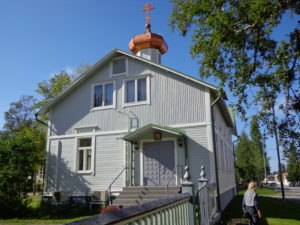
Kokkola Orthodox Church
used to be a port, exporting tar. Over the years the land has risen so the sea is now further away and the harbour has had to move several times! One claim to fame is a captured English barque – a rowed boat carried on warships. This was captured
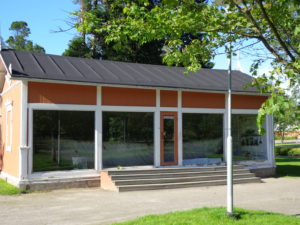
Boathouse with captured barque
in the Crimean war in 1854 when the English attacked Finland (yes Finland is a long way from the Crimea but Finland was then part of Russia).
9 July – so that should have been a straight forward drive of about 5 hours from Karasjok through the border to Rovaniemi in Finland. It was raining when we set off – I am sure we have had more rain than we should have. The roads were empty so it didn’t matter too much that the car was bouncing over the road when it encountered rain in the lorry tracks. The border was deserted and I guess we saw fewer than a dozen cars going our way for the first hour. First stop was Sodankyla to see a
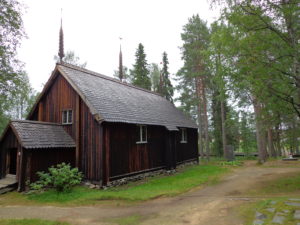
Sodankyla Church
17th Century wooden Church – somehow it escaped the scorched earth policy at the end of WW2. We stopped to refuel and there in the café was the friendly man from Ostend with whom I had put the world to rights whilst waiting for the lorry to be pulled out of the ditch yesterday.
We carried on to Rovaniemi but I could not resist a stop at the Arctic Circle line and the
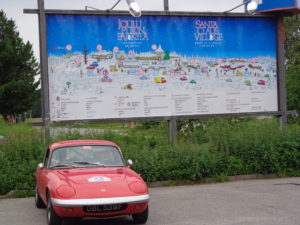
Don’t get lost at Santa’s village!
Santa village which has been constructed around it – yes you can have 365 days a year Santa – whoopee! This had to be followed by culture at the Arktikum – a museum of the Arctic and the Sami people. Then to the hotel – Allison found she had lost her handbag (cards, passports, phones, money, house keys – nothing of importance!) By the time we had got back to the Arktikum no sign, gone! The hotel receptionist was very helpful and phoned around – yes a bag had been handed in but no details would be given. She drew us a map and we ran off; the building was closed, no-one there. I ran back to the hotel – oops, wrong building, try this instead! A policeman let us in, thankfully everything was there – a big thank you to the honest citizen of Rovaniemi! She had put it on the roof when getting into the car – and left it there when I drove off.
8 July – a fairly short day (150 miles) to Karasjok, close to the Finnish border. We left early and made good progress on empty roads – where have all the RVs and bikes gone? This stopped suddenly when we found a Highways van parked across the road.
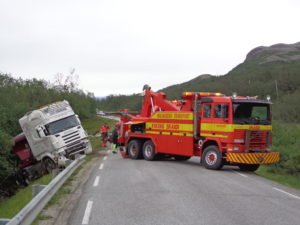
Road closed
A lorry ha gone off the road and into a ditch, two tow trucks were on hand to pull him out. After about an hour and a half it was winched up and onto the road. We were in a hurry as our guide book said there were guided tours of the Sami parliament at 1pm and Allison particularly wanted to go.
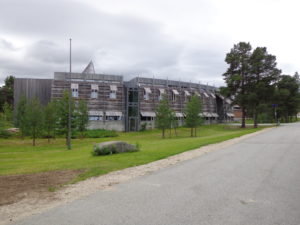
Samediggi
We got there with 20 minutes to spare – and found out that tours were every hour on the half hour! More culture followed at the local museum followed by a tourist trap at the Sapmi Culture park. The Sami are the indigenous people – historically semi nomadic reindeer herdsmen and now spread across Norway, Sweden, Finland and Russia.
7 July – a rest day after a midnight stint at North Cape, where the weather was good, mist on the water below
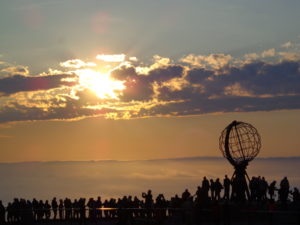
North Cape Midnight Sun
us and a clear sky above. What you see in the photo is mist, not sea. The drive back to the hotel included patches of fog and dazzling bright sunlight straight ahead – what a contrast! The rest day was spent on the island, visiting remote villages, constantly surprising ourselves at the number and variety of people we meet both tourists and “staff” -Canadians on a tour boat, a girl from the Philippines, one from the Isle of Wight, from Glasgow, a Norwegian married to one from Edinburgh, motorbikers we bump into from hotel to hotel
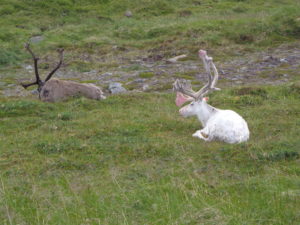
Reindeer
6 July – it was almost dry as we left Alta but then turned to wet with low cloud so some very slow driving on nearly empty roads. As we went further north over the hills, the sun emerged and burnt away the cloud – great! We stopped at a silversmith in the middle of nowhere – and were given some reindeer horns for the dogs to chew.
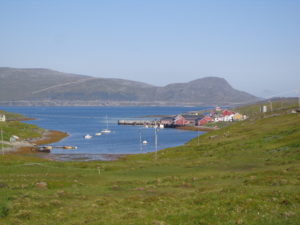
Repvag – a hidden cove
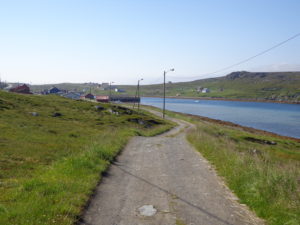
Repvag – street lights on this track?
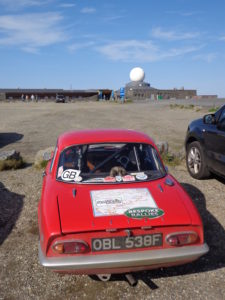
Elan at Nordkapp visitor centre
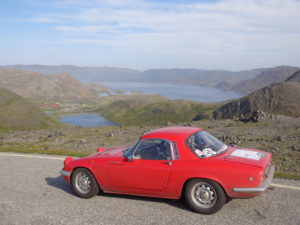
The road to Nordkapp
.
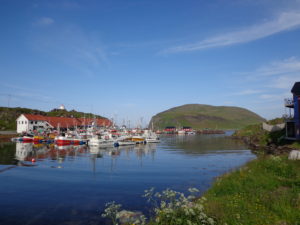
Kameyvaer
After checking in we went to North Cape and booked for an evening meal and hopefully a view of a “full” midnight sun – where the sun is visible and not just its rays. So six years after the Elan went as far south as possible – to Ushuaia in Argentina we ended up as far north as possible. We stopped for afternoon tea at a German run hotel in the tiny village of Kameyvaer – picturesque with deep blue waters
5 July – a long day with rain, wet and chilly! Speed cameras, cloud, road-works and very little sight-seeing. We left Narvic after looking at the steering, deciding it was not good but equally there was nothing to be done about it here. Arrived in Alta and decided it was much the same. Tomorrow we should get to the destination – North Cape.
4 July a day of mixed fortunes! We awoke early and went to visit the “museum village” of A (it has a circle over the A but not on my keyboard). The bakery was open so we had a freshly warm bun before taking photos and getting back to breakfast. I had found oil on my trousers and feet last night – now traced to the speedo cable (speedo died two days ago) – it now turns out that the outer cable had slipped over time where I had installed one of our trip meters. Pushing that back together means that the speedo now works – whoopee – haven’t checked my feet for oil yet! Then on to Narvic. Stopping for a photo-op,
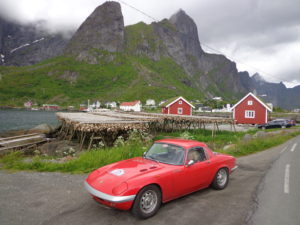
a smell of fish
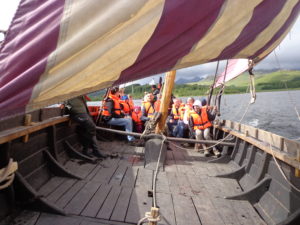
there was a smell in the air – no not the car but fish being dried – photo. Our planned stop was the Viking museum, where we spent a couple of hours and were fortunate to arrive at the time for a sail on
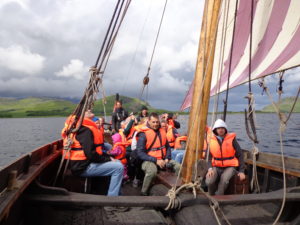
Viking Ship
a Viking ship. This is a 2/3 replica of one they found – and it goes! The sail
Viking Ship – sail
is all in front of the mast so if they want to change tack, instead of the sail and boom flying across the cabin, they release one bottom corner of the sail, pull in the other side – job done!
We left at around 2.30 with a little over 4 hours driving ahead of us – times dependent on how quickly you could overtake the queues of RV’s – get a close convoy and you’re lost! Almost immediately the engine coughed and spluttered – you hope its something simple but experience and your inner self tells you its – points. Glide to a stop in a convenient bus stop, triangle out, boiler suit on; there is a quick way to do this if you have all the right tools and lighting and you’re in the workshop. But when you’re at the side of the road, the only way is distributor out and hope you can get it back in the same place and keep the ignition timing – and it worked! Engine purred at the first ask and we flew! Now the problem at these speeds was the car’s desire to bounce around the road on the bumpy surface. At the hotel car park – problem diagnosed – there is play in the steering rack, can’t fix it here; have to drive more cautiously – oh shame!
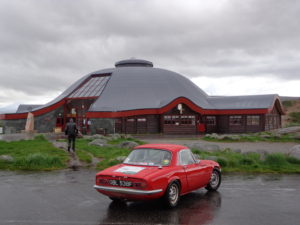
. 3 July – we started as has become customary in the rain. We have 150 miles to the ferry – but there’s only one a day so we can’t be late. We’re told it will take 5 hours which seems a very long time but not sure we can risk too much sightseeing just in case it does take that long. First visit, the Arctic raceway, a motor racing circuit just below the Arctic Circle; we arrived about 9am but its a bike day and no-one is awake, plenty of RV’s in the car park. Then off to the Arctic Circle Visitor Centre,
Arctic Circle Centre
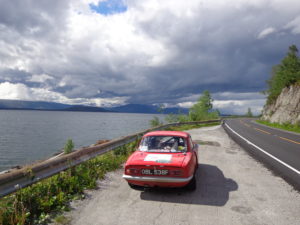
a building which the guide book describes as plonked by the roadside. The landscape here is much bleaker than before with barren rocks and less vegetation – its a deserted plateau. There is less traffic and we make good progress. The ferry for the Lofoton Islands leaves from Boda
Road to Boda
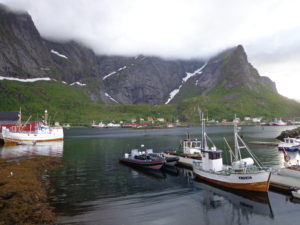
and we find ourselves behind Sue and Will’s XK, having last seen them at breakfast. Its a 4 hour crossing and a short drive to our cabin at Reine, with a view
View from the cabin
over the little harbour and the barren hills looming behind, some in cloud and others not. This last picture
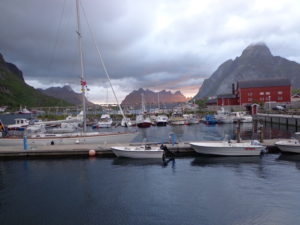
The land of midnight sun
was taken at five minutes to midnight, there’s a chill in the breeze and the sun’s rays can be seen between the hills above the boats centre right of the picture
2 July – today was going to be a long day with 300 miles to do and speed limits of c 80kph (50 mph) – and Norwegian speeding penalties are severe (so we have been told). Leaving the hotel car park, the speedo needle fluctuated wildly between 20 and 60 and settled on 0 for the rest of the day. No speedo, no odometer and the fuel gauge reads either full or empty. Fortunately the trip meter does work and tells us distance and speed. The day started warm and dry – the inevitable rain came later! We headed north on the E6 with a change of landscape to a more wooded feel.
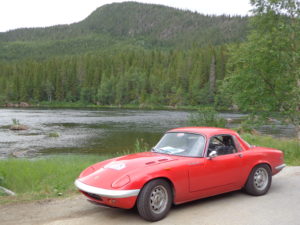
lunch stop
We stopped again for afternoon tea in Mosjoen where there was a festival
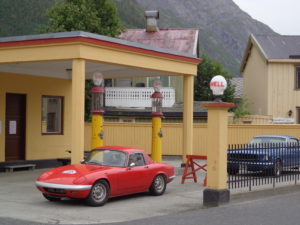
Fuel at 1933 prices not included
and found that one of their art exhibits was a refurbished 1933 Shell petrol station. We’ve not yet met the other half of the tour but we did see a couple who we had also seen in Trondheim so maybe its them – but where’s the car? Time will tell; we have a long ferry journey tomorrow to the Lofoton Islands so all should become clear……
1 July – a rest day in Trondheim.
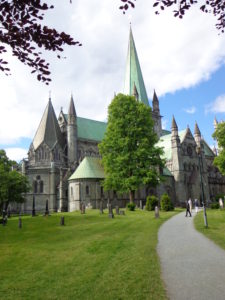
Trondheim Cathedral
We started with Trondheim Cathedral – and a leaflet caught my eye – advertising a production of How Like an Angel – a show premiered by the Norfolk & Norwich Festival in 2013. Next to the “Festung” overlooking
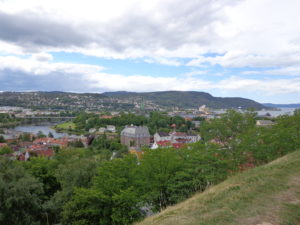
Trondheim from the Festung
the town, by way of the bicycle lift – its not photogenic! It consists of a metal path up the hill with a footrest poking out of a groove – put one foot on the rest, lean on your bike – and up you go! Then to the old town and later to the WW2 U Boat pens, now storage facilities, a bowling alley and other businesses – but such a solid construction that demolition was almost impossible. The car is snug in its underground car park, clocking up £25 per day parking charges. I decided the squeak was caused by movement in the rear suspension bushes (brand new!) – and that nothing will fall off just yet……
30 June – we left at 8am and headed for the Atlantic Road a series of bridges hopping over islands for 8 kms between Molde and Kristiansund,
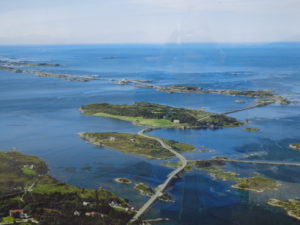
Atlantic Road aerial view – in the sun
winner of numerous awards for its design. sadly it was raining!
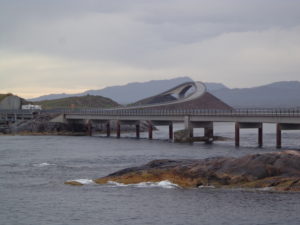
Atlantic Road bridge
This bridge is perhaps the most photographed feature.
Then on to Kvernes to see another Stave Church – we got to the outside but they had a series of tour busses from the cruise liners booked in for guided tours so our visit was very brief – we continued to Kristiansund. The Codfish museum was much quieter and surprisingly interesting! Then on to our overnight stop in Trondheim where we have a rest day, waiting for the tour’s second car to arrive from Oslo.
29 June – a short day but with two steep hills to contend with. First the Ornevegen
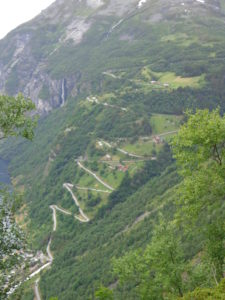
Ornegegen
“Eagle Road” out of Geiranger. This was straightforward, a popular road with packed view points. We met up with two English motorbikes who planned to do in one day what our route has given us 2 to do – but maybe they were travelling faster! We detoured to Tafjord
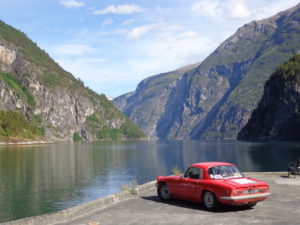
Tafjord Quayside
– a small village at the end of the fjord, whose claims to fame are a power station and a “tsunami” 100 years ago caused by a slab of rock falling into the fjord and creating a 60 metre high tidal wave which washed away most of the old village. Then over the plateau to the Trollstigen
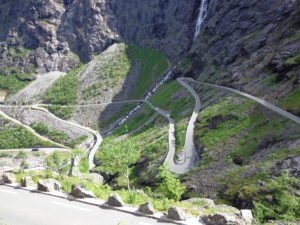
The Trollstigen
“Trolls ladder” which has steep hairpins as the road drops alongside a waterfall. Lunch was on the banks of the Romdalsfjord
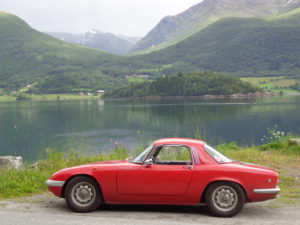
Romdalsfjord
– a much flatter and open Fjord contrasting with the sheer sides of Geiranger en route to another Stave Church at Rodven
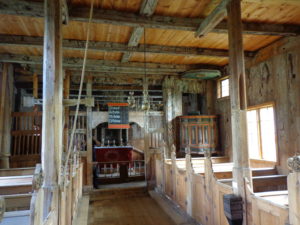
Interior Rodven Church
. Now in Molde, an industrial town and the end of the Fjord section of the journey – and the German tour group have rolled into town; they now head south whilst we head for island-hopping Atlantic Road and the north, via Trondheim where we expect to be joined by the second car in our tour.
28 June – a rest day but that is not what Allison thinks about her knees. The German tour group was leaving as we checked fluid levels, tightened the handbrake and set the electric fans to permanent “on” in preparation for the two climbs tomorrow.
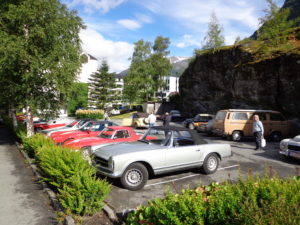
Reserved Car Park
Geiranger is a tourist area and has been for 150 years, it has loads of walking routes – just Allison reckons we walked too much! From high above the Fjord we watched a cruise liner arrive to join the Musica which was already moored up ( the Musica weighs 92,000 tonnes and carries 3220 passengers!)
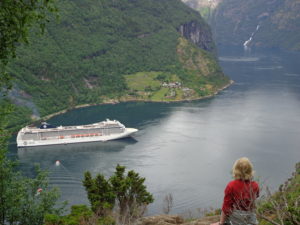
Allison watching MCS Musica
27 June – the Flam railway. This 20 km section of railway rises nearly 900 metres and lasts about an hour. It twists and turns through some 20 tunnels to link Flam on the Aurlandsfjord with the main Bergen to Oslo line.
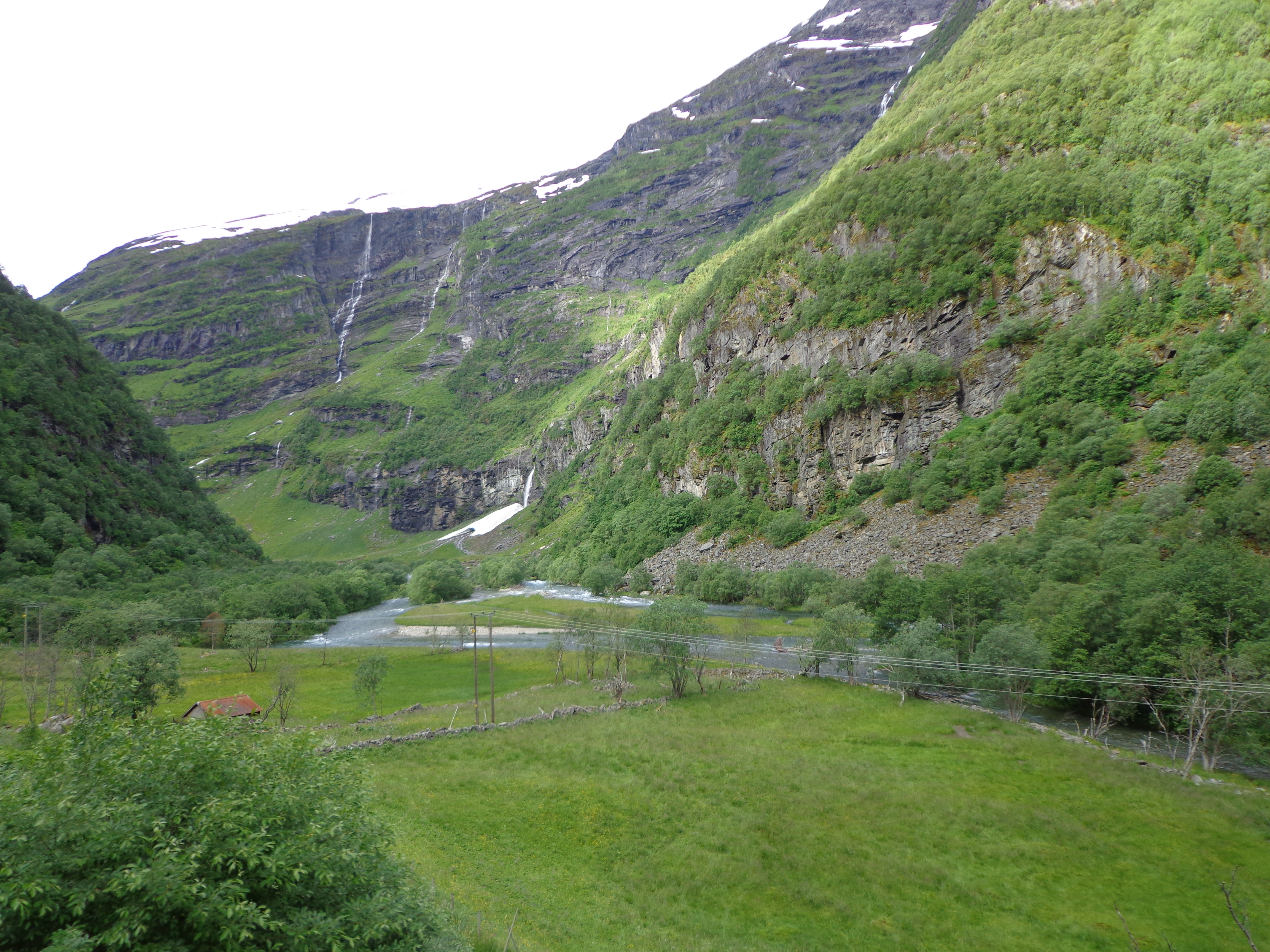
Flam railway landscape
The rest of the day was concerned with tunnels, Stave Churches and overheating (nearly). Major tunnels are a feature of the area, one has a roundabout and another, 24 km long, has three rest areas,
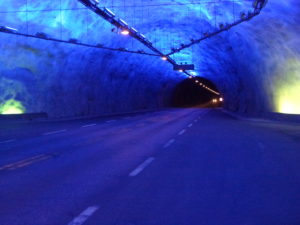
Laerdal Tunnel
slightly surreal with a ghostly blue lighting above and yellow lighting at ground level.
Stave Churches are wooden Churches from c. 1150, there were thousands but now only 29 remain.
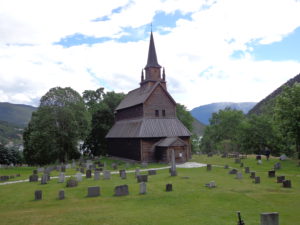
Kaupanger Stave Church
After the Churches it was the 1434metre high Sognefjellet mountain pass (said to be the highest in Northern Europe). At the top they were cross country skiing but getting up there proved to be hot work for the Lotus and we had to stop when the temperature gauge got to 100C. Not sure those electric fans are cutting in properly! This was followed by the fastest section of road driving we have yet encountered in Norway – parts of the route have a speed limit of 90 kph but I could not possibly recall what speed the speedo showed! Arriving at our hotel in Geiranger the car park was reserved – for a German Classic car tour! We joined them, adding a touch of Lotus class – how is it that a German tour group can muster 40+ cars but our UK group was only 2 and the second has yet to arrive?

View from Geiranger hotel room
26 June it was still raining when we disembarked at Stavanger. About 30 km later and we queued for another ferry on the island-hopping coast road to Bergen. This was Fjordland, where the roads hug the shore line and waterfalls cascade down the steep slopes on both sides.
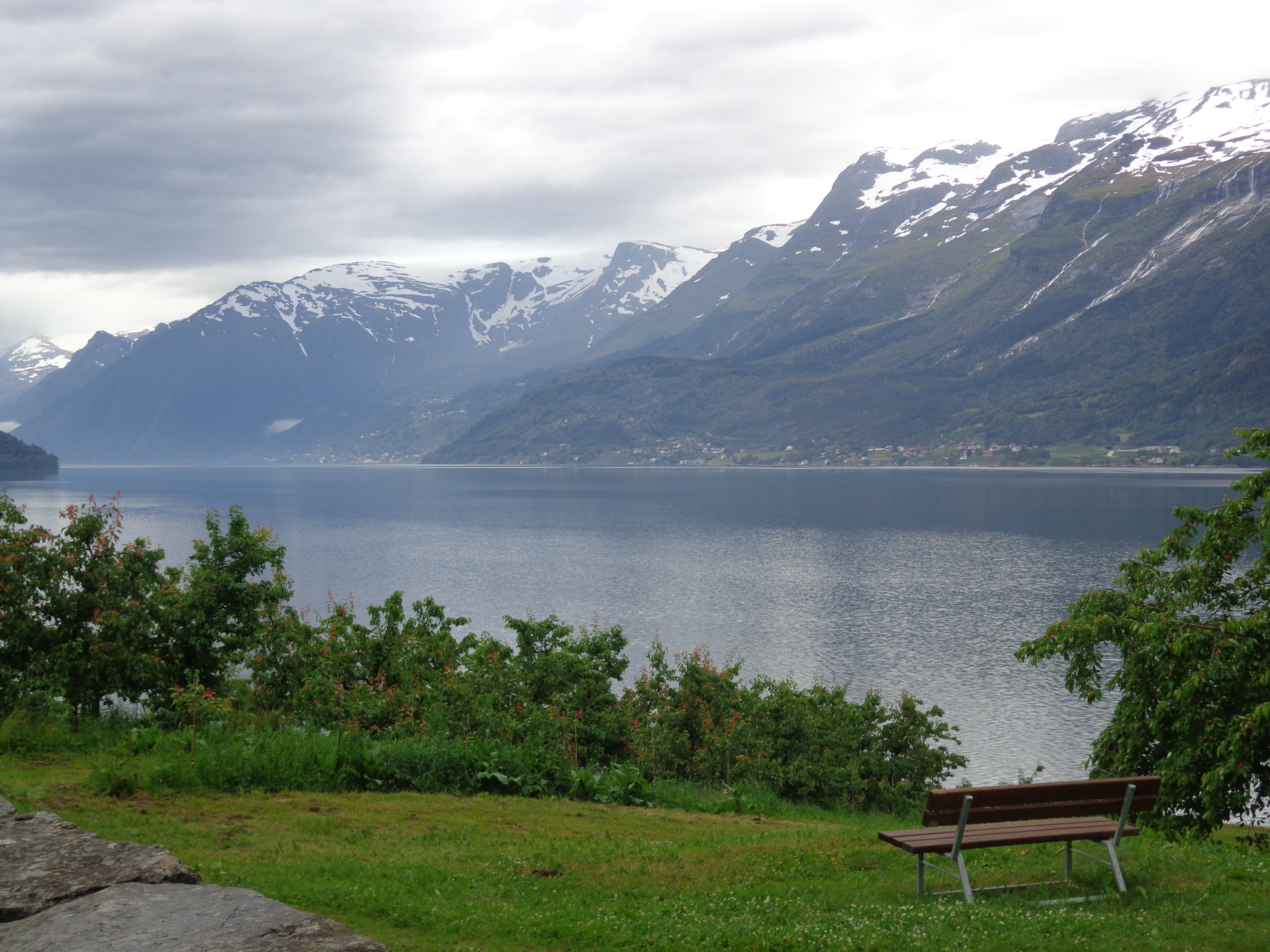
Fjordland
We stopped at Langfoss waterfall (conveniently located opposite a lay-by on the main road) and we handed some Norwegian flags by a very excited kiosk owner – the Royal Yacht with King and Queen aboard was due to pass by at any moment.

Royal Yacht
We could be honorary Norwegians and wave enthusiastically! Our next stop was not so simple. There was a noise and feel of a puncture but no flat tyres; one wheel had come loose and was wobbling on the hub. This was annoying as it damages the locating holes on the rim and may be another write-off – and they aren’t made any more. Another waterfall at Tvindefoss was said to be one of Norway’s most popular sites (it is believed to enhance sexual potency). The continuous rain put a damper on that and it was nearly deserted! We carried on to our overnight stop at Flam – home of the Flam Railway.
25 June and a leisurely drive to Hirtsals in Northern Denmark with a visit to Aalborg thrown in – hmm it didn’t quite work out like that! Getting out of Hamburg went ok but it was raining and it rained all morning until we got to Denmark. The two lane motorway north was full of cars and water and roadworks – and we crawled. We had to stop at one stage in an emergency pull-in when the wiper rubber tried to fly off the blade – that was fixed by that invaluable invention – a cable tie. We crawled into Denmark as the Security Services glanced at but didn’t check every vehicle. Aalborg was a might have been and we reached the ferry terminal about half an hour before check in.
24 June – now in Hamburg after some unwanted excitement en route. The car went to the rolling road on Tuesday morning to sort out a lack of performance and low speed power. I went to collect it on Wednesday afternoon – and drove for about a mile before it died – completely, dead. A tow truck took me back to the engine tuner. Points. No surprise, the car has always eaten points and this was solved by the Boyer Bransden ignition pack – but that was for positive earth. After the Amazon, I installed an alternator, which is negative earth and after checking all the wiring I hoped not to need this protection – wrong, obviously! How long will these points last now?
Thursday and last minute checks – radiator level low – where has the water gone? I started the engine, stopped it and saw a dribble round the thermostat housing. A new gasket was not the answer but a new gasket plus some sealer did the trick. Then off to Harwich – and the temperature gauge just carried on getting higher – the fans were ok but not switching on; I tweaked the temperature control and they woke up.
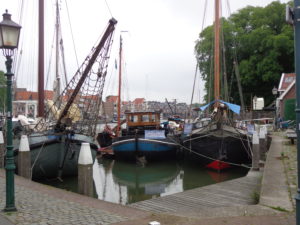
Friday and the “scenic route” to Hamburg via Hoorn with its historic port and old buildings then to the dam separating the Isselmeer from the North Sea, sadly it was overcast and apart from hordes of motorbikes there was little to see. 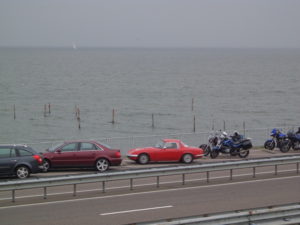 We continued to Germany and motorway jams – but at least the radiator temperature held steady – useful having two fans! Reaching the hotel in Hamburg we found the reason for the motorbikes – a Harley event in Hamburg,
Moscow/St Petersberg 2019
Moscow/St Petersberg 2019
The yellow Elan should have been good to go to Moscow after its abortive trip to New Zealand – but maybe being stuck in a container for so long was not good for it.

Ready to go
Everything about the rear nearside corner needed attention – there was movement in the drive shaft so I thought – Aah wheel bearings! But it wasn’t, the drive shaft had been worn away by the bearing so was discarded, then the donuts collapsed and the handbrake would not work and it seems all the moving parts are suffering from age so I’ll replace the rear calipers when we get back – and the engine leaks oil. Aside from that…. The clutch fluid was dirty so that along with both master and slave cylinders was replaced and the noise from the exhaust was old age so the downpipes were also out for scrap.
Sept 1st -our first night was in Kent, where we met James from Scenic for supper and collected shirts for us and for John and Helen in their TR5;they were starting from France so we met them in Brussels. I wasn’t happy with the way the ammeter was behaving in jams on the M11 on the way down so prior to taking our trip under the Channel Tunnel, we acquired a new Regulator box – after which, of course the old regulator behaved perfectly (so far)!
Sept 2nd – an uneventful run to Folkestone via Ghent and on to Brussels; enroute to Brussels we were overtaken by a red +2 with sunroof from which two waving arms emerged

Company

By the rive in Ghent

Ghent town hall
Sept 3rd we started our run to Bielefeld by visiting Leuven – a hurried visit as this cycle friendly town hides its car parks away – but the Cloth Hall is remarkable on any length of visit

Cloth Hall Towers
. The tour operator (Scenic car Tours) suggest “direct” and “scenic” routes where possible. the direct uses main roads whilst the scenic should be just that but in this area it was just a slow and boring drive through small towns, taking a long time and seeing little – so we headed to Munster and TomTom took us the long route via Eindhoven! Anyway Munster is an attractive town

Munster Rathaus

Munster
Sept 4th to Berlin. We didn’t fancy visiting Hannover so took the “scenic” route to Hamelin – famous for the fairy story of the Pied Piper who is now the source of much tourist income for the town judging from the multitude of tourists and tour groups thronging the main street

Rat plaque set in the cobbles

Rat Catcher House pub
The main site today was Autostadt, the VW headquarters at Wolfsburg.

Hamelin
This is on the riverbank next to their factory and includes a museum and wo storage towers where customer cars are stored waiting collection and are whisked into storage bays by GPS guided rotary lifts

Wolfsburg storage towers

One of the few non VW cars in the museum!
The museum was themed on design, profiling designers who influenced change over the years – and there was one Lotus, a 1960 Elite. We were late into Berlin and encountered our first mechanical problem as we drove into the open-air, unsecured car park, catching the exhaust on a steep change of levels and pulling the exhaust pipe off the downpipes – the result was rather noisy! John helped as we did a lot of hammering late at night to reassemble the components -luckily undamaged; and no-one in the supposedly supervised carpark even came to see what was happening.
Sept 5th – rest day in Berlin; we had tickets for the Sightseeing bus and did that as well as visiting various sites, mostly Wall related.

Checkpoint Charlie leaving the east

Checkpoint Charlie heading east

East side Art on the Wall

East Side Art
Then the camera died!
Sept 6th to Warsaw. We reckoned we had time for one serious piece of sightseeing to go with our 350 miles of motorway and Poznan got the vote. Poznan has a lovely central square with old craftsmen’s houses next to the town hall, plenty of arches, old churches, a river, cathedral and a croissant museum with demonstrations of how to do it and how to eat it.

Town Hall

Craftmens houses

Baroque interior
So after a pleasant afternoon, it all went pear shaped! I had left the side lights on so the battery was flat, never mind I had jump leads but the attendant had no access to any cars and the only car moving had a lady driver who was not interested. Allison and attendant and a random stranger pushed and it started!! Good, problem solved? No, in my relief I forgot that the entrance had a raised kerb and pulled the exhaust part way off. It was not too noisy just rattling against the bodywork. We hurried along, checking the engine speed to avoid overcharging the battery and killing the dynamo (main concern as I can always get a battery which will do). The TomTom started giving odd route plans, increasing the distance and time and took us off the motorway. We took an executive decision (ie it was wrong!) continued along the motorway and stopped for the next three hours as there had been an accident ahead Driving at night was not part of the plan and driving at night with a dicey battery was a definite no-no. So we drove 80 miles at night, arriving at the hotel after 9.30. They still served supper, after which we went to the carpark and hammered the exhaust back into place. Bed time around 1.15 am!
Sept 7th – rest day in Warsaw? After our late arrival we had an early start as we needed to get a battery booster/jump start pack. Whilst we were stuck in yesterday’s motorway jam, the guy behind us came to chat and showed us his pack which we could use if the car would not start but it did. The hotel, uncertainly, directed us to a spares shop, which did not have one but in turn directed us to a larger firm who might. We took a taxi but no luck. The taxi driver now expressed interest and offered to jump start us with his pack. Only then did he realise what we wanted to buy – so back most of the way we had just been to a supermarket, where the shelf was empty! Our driver was not to be deterred and marched off, proudly returning with one. Then we could start our sightseeing if we could stay awake.

Warsaw Old Town
Allison, in picture, in deep conversation with a protester calling for the Norwegian Government to stop kidnapping children.

Warsaw Old Town with mermaid

Warsaw Old Town all rebuilt after the war
We managed the bus tour and the (1944) uprising museum.
Sept 8th to Vilnius, 310 miles along generally good roads. We unintentionally took the “scenic” route which had a better surface than the “direct” route and arrived in Vilnius around 2.30. The hotel carpark could not read our number plate (there’s a surprise!) so we had to reverse up the slope to the underground parking back onto the main road. The old town was packed with runners and crowds for their half marathon and the main square full of tents and marshals.

Marathon crowds

Vilnius Pilies Street

Old Vilnius display

Literature Street

Vilnius Upper Castle
Sept 9th – into Russia! We left early for a 300 mile drive and the border. Lithuania does not have a border with Russia so we went through Latvia – easy, an EU member? The roads were good and we were at the border by 12.15 then it all went wrong. Latvia takes its EU border responsibilities extra enthusiastically so they are a real pain. They asked for EU insurance (to check we had been legal whilst in EU) and our driving licences which they check against an EU database. Mine failed! I had reported my previous licence as lost/stolen 18 months ago and DVLA had issued a replacement. The Latvians claimed that my driver number, which never changes, showed as a lost/stolen licence – ignoring the fact that DVLA had cancelled the old and issued a new one. So for 1 1/2 hours we were held whilst they half heartedly phoned the police for instructions on what to do – was I a thief or a suspect? I had already found the lost licence and had both with me. So I showed them the old one and eventually they confiscated the old licence and gave me an official Schengen Information System form informing me of……. Compared to them the Russians were slow but peaceful – we had no expectation of a speedy crossing but the Russians were quicker than the Latvians. After the border we bought our compulsory Russian car insurance – probably not worth much but it looks good and is stamped and signed (no idea what it says!). Good roads took us to the overnight stop in Veliky Luki in the middle of a housing estate.

Veliky Luki car park
Sept 10th – Moscow here we come! Six hours through trees and more trees took us to the capital then we hit traffic. It was hot and we crawled for about 3/4 hour in heavy traffic and the car coped amazingly, didn’t overheat or stall just kept going. We were passed and photographed (constantly) by a girl in a RHD Mazda MX with pop-up headlights – I thought she would hit the side of the tunnel as she concentrated more on her photos than the traffic!

Moscow Mazda
On reaching the hotel, the car had had enough. Having stopped it would not restart – but with our jump start pack we managed – the battery had died through slow traffic with the lights and electric fan at low revs giving a continuous discharge. We were not alone, the TR5, arriving after us, had a completely failed battery and had to get a new one.
Sept 11th – the Lotus with Red Square and St Basil’s!

St Basil’s and the Kremlin

Tour cars at Metropol Hotel with the Bolshoi

Lotus and the Kremlin

Red Square and St Basil’s at 6.30 am
The Metropol Hotel is a huge rambling building a few minutes walk from Red Square and opposite the Bolshoi. First thing this morning, ours were the only cars parked outside – hopefully parking is included in our package! Breakfast was accompanied by a harpist which we’ve not had before. Today was to be a hop-on bus trip day but we spent about an hour waiting for the first to arrive, they crawled through the static traffic – no wonder smog hangs over the city! There are three routes but we had driven most of the city tour on our photo trip this morning – in about 15 minutes compared to their one hour.

St Basil’s at night

GUM store Red Square at night
Sept 12th – rest day in Moscow a late start today as there were lots of police and barricades round the Kremlin entrance and our plan to visit the museum there was thwarted as unusually it is closed on Thursdays. So we went on the underground instead. Catherine the Great’s Palace at Tsarytsino was never completed in her time but has now been finished and restored. Bunker 42 is a Cold War relic and as well signposted as you might expect of a secret bunker.

Catherine the Great’s Summer Palace at Tsarytsino

State Room at Tsarytsino Palace

Bar / Restaurant 65 metres underground at Bunker 42

Conference Room at Cold War Museum Bunker 42
Sept 13th and a 360 mile drive to Veliky Novgorod, one of Russia’s historic towns and one time capital of the Novgorod Republic. Now its a stepping stone between Moscow and St Petersburg with a pretty old Kremlin, an old Cathedral and a huge collection of Church artefacts. The drive was mainly on the new M11 toll motorway (I got bored driving through small towns on the old M10!). We drove in convoy with the TR out of Moscow then split as they wanted to follow the M11 and we the M10 (and then both changed over). We had to use our jump start pack first thing but for the rest of the day the battery was fine; John was unsure about his alternator but gained confidence as time passed. We reached Veliky Novgorod in time to see the Kremlin and St Sofia Cathedral. Then it started to rain – hope the car’s dry tomorrow.

Novgorod Kremlin Walls and moat

Novgorod St Sofia

Millenium of Russia Monument 1862

Gospel Cover – Archbishops Palace
Sept 14 there had been a lot of rain overnight but the yellow Elan does not leak too much! Our first stop on a short day’s drive was to a museum of wooden buildings a couple of miles out of Novgorod. 
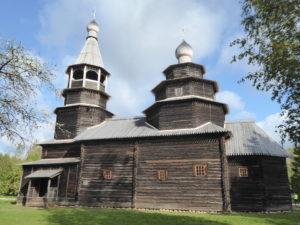
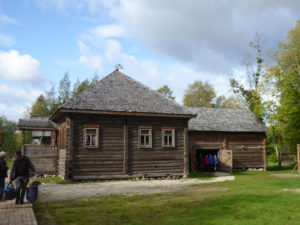 Some buildings were 250 years old but many of the houses were only about 100. Then on to St Petersburg, a short, uneventful run. Our hotel is on Nevski Prospekt and we had a chilly walk down to the river before supper. Rain is forecast for the next few days so quite a contrast to the weather we’ve had up to now.

Inside the huge Kazan Cathedral

The Winter Palace under threatening skies

On Nevski Prospekt
Sept 15th – a cold wet day in St Petersburg. We started on the city centre Hop-on, hop-off bus but that was stopped as roads were closed for a marathon. We tried the other route and found the Peter & Paul Fortress as the wind and drizzle increased. Leaving that we were soaked by a passing bus and my feet didn’t recover until we got back to the hotel. The Faberge museum was another stop where we saw a couple of eggs…

Lenin’s cell at Trubetskoy Bastion Prison

Damp central courtyard at the Fortress

Coronation Egg and contents 1897

Anniversary Egg 1911
Sept 16th
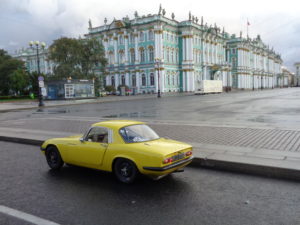
Lotus at The Winter Palace (Hermitage) St Petersburg

Church of the Saviour on Spilled Blood
After my early morning photo drive it was back for breakfast. Our 24 hour hop-on bus tickets had a little life left so we went to the Church of the Saviour on Spilled Blood (site of the assassination of Tsar Alexander in 1881). Then to Engineers Castle, a palace built for Prince Michael as a safe place and where he was assassinated 40 days after moving in – some plans just don’t work! Its now home to various art exhibitions, including one on the Romanovs (family of the last Tsar) I got lost trying to work out who married who and how many wives/husbands each one had. The underground took us to Yelagin Palace (closed)

Engineers Castle

Inside the Engineers Castle

Yelagin Palace

Churchyard Alexander Nevsky
. and then to the Alexander Nevsky Cathedral. Supper was on one of the many restaurants in this part of town; Russia seemed overrun with tourists and there is infrastructure to cater for them.
Sept 17th Now we head west to Helsinki and a border crossing – will the Finns make such a meal of it as the Latvians? No! We sailed through both halves of the border and arrived in time for some sight seeing before supper with Finnish rally friends.

Helsinki Harbour

Uspenski Orthodox Cathedral

Uspenski Cathedral

Central Library
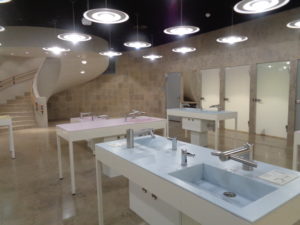
…..and the modern toilets

Land of water and trees
.
Sept 18/19th sightseeing followed by a 29 hour ferry to Travemunde near Lubeck, Germany, landing around 9.30pm so straight to bed!
Sept 20th coffee with friends in Lubeck followed by 6 hours drive to Hook of Holland and the ferry to Harwich. Leaving Lubeck, the smell of petrol told me that the carburettor fuel line bolts had come loose – a normal event and I carry a spanner in the glove box. South of Bremen it was road works followed by more road works. Finally the open road beckoned and we were deafened as the exhaust pipe sheered off, the exhaust dragged underneath the car and it was very noisy! As luck would have it we were approaching a slip road and as we got to the end of that, an old VW Beetle appeared and guided us to a workshop nearby. We were told to be patient and soon we were welded and on our way. We reached the ferry in time for a meal on board and an uneventful return home.
Bulgaria June 2012
Bulgarian Rally
The 2nd Interbalkanic Classic Rally sounded too good to miss – so we signed up for it. It was to be based at Varna on the Bulgarian Black Sea and jointly organised by the Greeks and Bulgarians. Our route out was influenced by insurance, the Green Card only covered EU countries which ruled out Belgrade (Serbia) so we fixed on Calais, Aachen, Cologne, Frankfurt, Regensberg, Linz, Graz, Pechs (Hungary), Arad (Romania) and Rousse (Bulgaria). With detours this came to about 1900 miles – and 32 hours according to the internet routefinders. No-one had told the internet about Romania – as we were to find out.
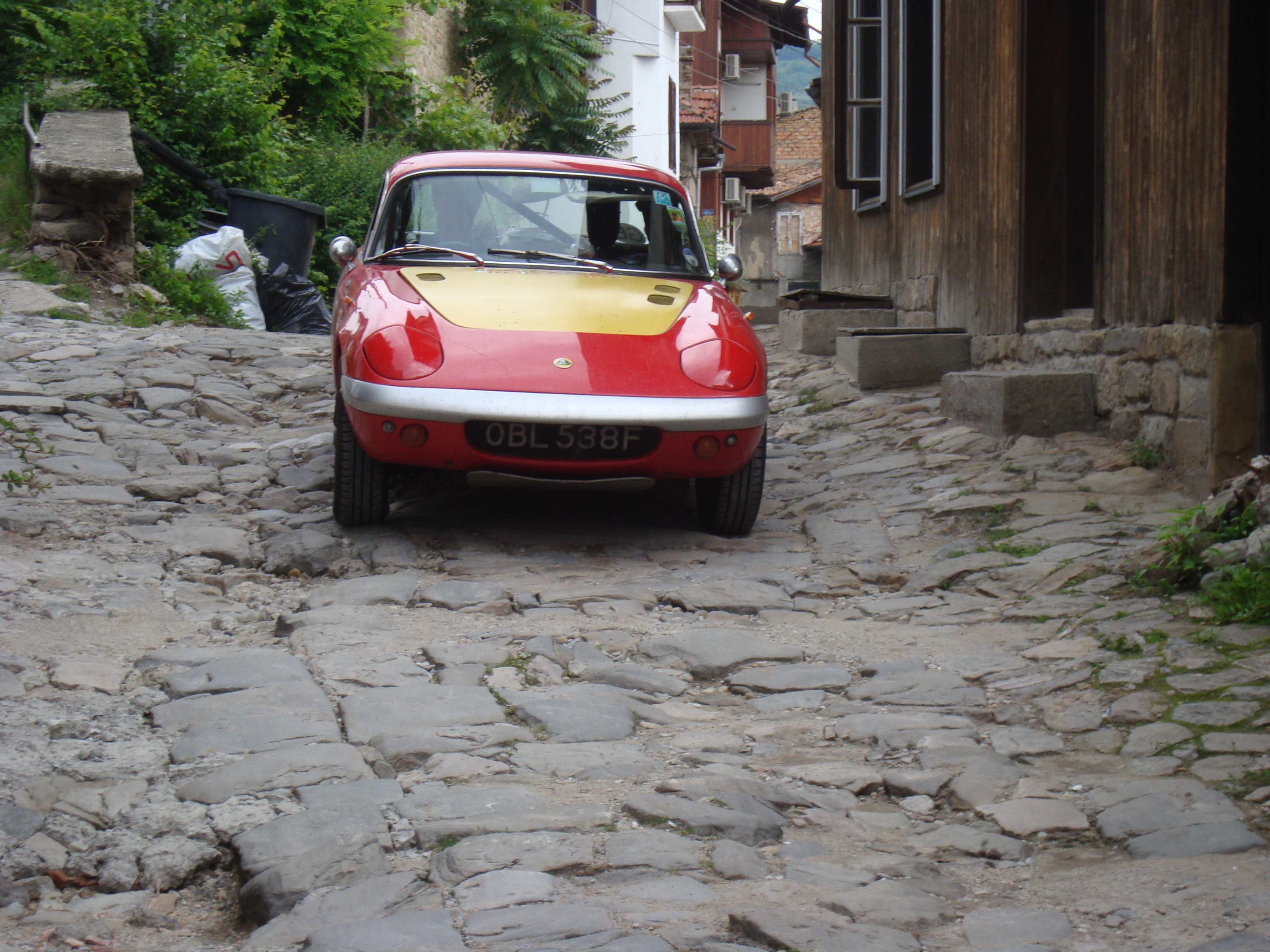
During the last rally we had problems with points, differential and starter motor so we now had a new starter and diff and had fitted a Boyer Bransden ignition system, still points based but with electronic wizardry to reduce the current passing through the points and hopefully extending their life. Whilst it had not been a problem we had for some while also suffered from a petrol leak in the Webbers so they had been refurbed and restored to their original, larger jets.
Twelve miles fromhome the engine was missing so a plug change and a tweak of the carb balance and mixture seemed to improve the situation. Our run was smooth to Dover and on to the overnight stop in Liege where the hotel corridor had more bikes than residents. The next day was a long run to Graz but with no lorries on the road on a Sunday it was an easy one. On Monday we crossed into Hungary and headed for Pechs. It was a public holiday so no lorries and the roads, which curved and flowed gently though the countryside, were Lotus terrain and pleasurable driving. A problem emerged at a fuel stop when the boot handle gave up. It had long been stiff and the prospects of a shut boot which would not open or an open boot which would not shut were equally unappealing. We found a compromise and moved on.
Pechs was a European City of Culture in 2008 and has a main square with pedestrian streets off – but the tourist information was closed, on a bank holiday! We were pointed towards a locked gate and managed to extract some tourist leaflets carefully positioned within reach of long arms. We found a hotel just off the square – very friendly staff but with that mid European speciality – an aura of faded glory. The underground car park looked welcoming as the heavens opened behind us and the meandering tourists scurried for shelter. The car park wasn’t such a good idea next morning as the car does not like steep inclines especially first thing in the morning. Furious revving and slipping of clutch helped us escape the fumes we left behind – sorry guys!
Crossing southern Hungary on largely empty roads to the Romanian border near Arad we made good time but the rest of the day was pretty dire. It started with a 6 mile queue of lorries to enter Hungary all parked up on the verge of the single carriageway main road. Arad was busy and was being dug up – probably to improve the roads. It was hot and the first main holdup was a crash between a van and a lorry at a junction a few metres before a level crossing – which itself was taken slowly because the rails lifted as the lorries passed over. We stopped and crawled and stopped and the temperature rose to a good 99 degrees (why did the electric fan choose today to have a earthing fault?). We saw four accident sites that day and were only surprised there were not more. That poor country is blighted by the continuous thunder of heavy lorries, vans and cars all chasing time through country and village alike. The traffic moves in bursts as you overtake one group of lorries before catching up with the next batch a short way ahead. The underlying poverty both here and in Bulgaria is demonstrated by the “ladies of the road”, waiting in lay-bys for their next client.
We reached Sibiu before dusk and enjoyed a brief but damp stroll round the 12th century town and a rest from the concentration of the road. Next morning we sorted out the fan and changed the points as the engine was clearly unhappy. The points were more burnt than I expected from the new ignition system – I later discovered that it was also not earthing properly and the engine was much happier when that was improved.
The plan was to drive the trans Fagarasan mountain road south to Pitesti – but when we got there we found it was closed as the winter snow had not cleared. We tried to visit the Monastery of Cartisoara – but that had a sign saying it didn’t welcome tourists – despite the brown tourist sign. This was clearly going to be a good day! We returned to the main (lorry) highway and the motorway to Bucharest. An electrical check at a service station found the ignition earthing fault and the engine hummed as we approached the capital. Sadly the navigator didn’t recognise the importance of the signs meaning “ring road” so we ploughed on to the very centre at 5pm on a hot Tuesday. Fortunately fan and ignition worked perfectly as we asked our way out to the road south to Bulgaria – we asked at petrol stations, we asked pedestrians, we asked the drivers of the cars ahead of us, beside us and behind us – and it worked! The only one that didn’t was the taxi driver who demanded an extortionate 50 euros (reduced eventually to 20) to guide us out. Once we found the road we sailed down to the border, no formalities there of any sort, not even a passport check. Then on to the picturesque town of Velika Tarnova, arriving just before dusk.
For a morning we were tourists before completing the final 140 miles to the rally hotel, driving through a flooded Varna as the heavens again opened and the streets turned to rivers. We were amongst the first to arrive and soon met the only other non-Balkan participants, a Belgian couple who live in Greece. The others were from Greece and Bulgaria with a few from Romania; this meant it was an international rally so all documentation was in English (with a Greek accent).
The rally was unlike any other regularity rally we have ever attended. The start was at 9.30, much later that the 8.00 we are used to. 
We fluffed the first regularity as I had not read the instructions properly and was too busy directing the driver to realise in time that we’d gone wrong. We headed north to Kavarna, whose Mayor awarded us a prize for looking good and Allison was interviewed by the national TV for broadcast on the news reports that evening. The highlight of the day was lunch at the Thracian Hills Golf Club. We were joined by a Bulgarian crew and despite our complete lack of Bulgarian and their limited English we soon established that the local car club was very friendly with members from a wide background and a huge variety of cars. I don’t know how they’ve managed it but they have all sorts of classic and vintage cars, maybe because we were English we heard more about our cars. These guys regularly come to UK buying up cars – Bentley, Jaguar, a model T Ford. One ran a garage and had a second hand tow truck bought in England – for work not the rally. One Greek couple must have the last surviving Morris Marinas – not one or two but seven!
Day two and the rally headed west and after visiting the Standing Stones at Pobiti Kamani 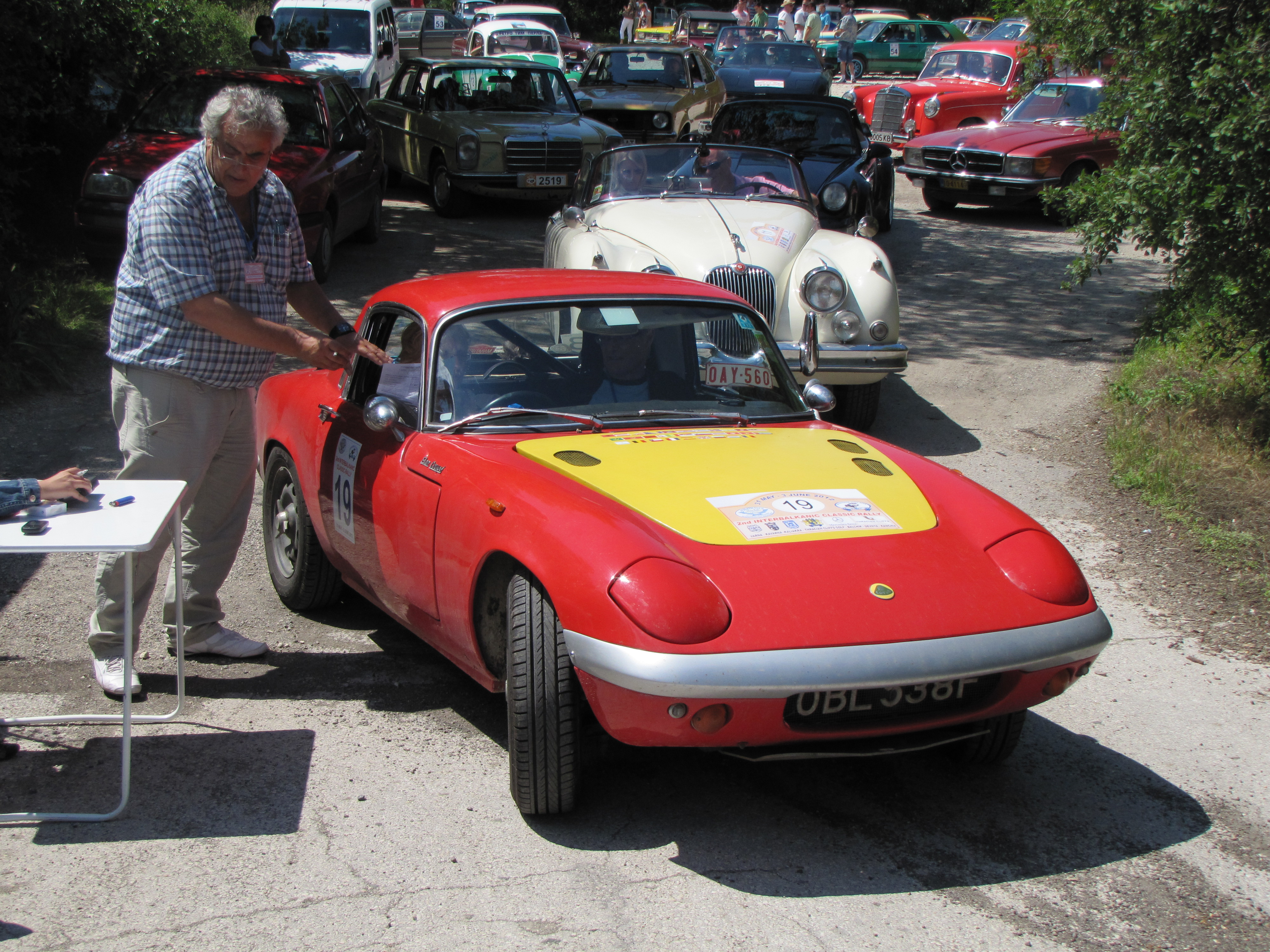
(stones or petrified forest – opinions are divided) we provided entertainment for the residents of Denvya by chasing round cones. We should have excelled at this but the Elan has a deep rooted dislike of chicanes round bollards and stop-starts into “boxes” and stalled and would not start! It did this on the last rally in Spain so there’s something to sort out here – suggestions please!
Lunch was at an old mill whose wheels were powered by water bubbling up from springs – a very tranquil and peaceful setting and our Bulgarian friends from yesterday were insistent we should join them again. The restart was particularly random, one moment we were wandering round the springs and the next there was a concerted rush to leave – and with the time control at the end of a country track this resulted in a long queue of cars going nowhere slowly!

Day three and we headed south to a Russian owned beach resort and lunch. We returned to the hotel at about 4pm and as the cars had done little more than 200 miles in the three days there was little need to do much apart from clean off the dust.
Prize Giving that evening was clearly the purpose of the rally. We were seated at long tables in our car clubs and this time we were with the Greeks. The meal started at 8.30 and after the appertisers was prize giving. Everyone received a prize – we didn’t intend to be greedy but we received five! One for winning our class, one for finishing the rally, one for the longest distance travelled to the rally, one for Lady Driver and the last for representing our participating club – Club England. Allison was also awarded honorary membership of the Automobile Retro Club Varna. Then there was dancing and singing and at about midnight the main course arrived – we didn’t last long enough for desert and left the Varna and Burgas clubs celebrating a successful and enjoyable event.
Our return journey mirrored the outward, with sightseeing in Bulgaria, Romania and Hungary and a haul Austria to Calais. Romania in particular was a changed country once we got away from the main lorry route. This time we found the Bucharest ring road, which was slow and tedious (not really any better than ploughing through the centre though we had the advantage of knowing where we were going!). 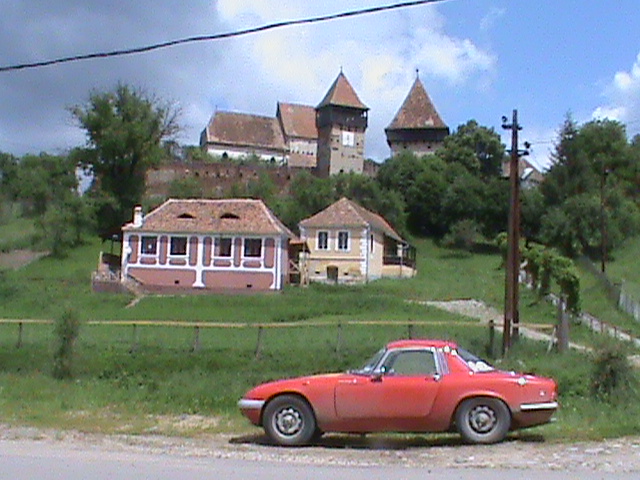
We visited fortified Saxon churches on deserted roads and tracks near Sighisoara and entered Hungary through the much more pleasant crossing at Oradea. Hungary’s motorways are top quality and we sped through to Tata where we spent the afternoon wandering round the lake, drinking coffee, eating cake and watching “dragon” boats rowing to the beat of the cox’s drum.
We had one overnight stop before Calais, at Wuerzburg where the locals were drinking Franken wine in the sunshine on a bridge linking the main town with the Fortress Marienburg on the hill opposite.
Then on to Calais and home. This was one of our easiest trips with the car taking the long hard slogs and the gentle meanders in its stride. There’s still something to sort out with the fuel consumption as we only managed 23 mpg and a very sooty rear end! Somehow that’s no surprise as there’s always something that needs doing…….
2nd Interbalkanic Classic Rally – brief report
Now in Sighisoara in Romania on the way home and its raining! A contrast to the rally which was run in the heat and sunshine of the Bulgarian Black Sea Coast from a base in Varna. A rally unlike any other we have done – we ended up with 6 Trophies and Allison was given honorary membership of the Automobile Retro Club of Varna. Despite making a hash of two of the nine Regularity sections we won our class so got a trophy for that, a trophy for finishing, one as representatives of the “England car club”, one for travelling furthest to attend (1,900 miles each way), for Allison, Coupe des Dames and one from the Mayor of Kavarna. When the Press found out how far we’d come, Allison was interviewed for Bulgarian TV – and they broadcast the footage!
The rally was more a party than a rally with the purist concepts of early starts and snatched lunches replaced by a more self service approach and two hour lunches. Our Bulgarian hosts were particularly welcoming and despite our complete lack of Bulgarian insisted that we join them for lunch, where we found their knowledge of English was better than many were prepared to admit.
The participants included a pair from Romania, a Belgian couple and the remainder roughly equally split between Greeks and Bulgarians. The cars displayed the totally unexpected wealth of classic cars now restored in the Balkans – a mid 1950’s Bentley, and 1930’s Moskvitch, “modern cars” such as Golfs and Mercedes 190 – and extraordinarily to the English, a Morris Marina, one of 6 owned by the same couple. There were Porsche, Jaguar, Alpha Romeo, Beetles and BMW.
How’s the Lotus after this travelling, with some pretty long days? Liege to Graz was the furthest in one day and Pechs (Hungary) to Sibiu (Romania) probably the hardest with hour after hour of following trucks on totally inadequate roads through villages and valleys, overtaking one goup just to come up to the next. We saw four accident scenes that day. Pretty well all things considered – we’ve had some earthing problems, the boot lock is broken and the air intake box is held on with bailer twine!
23rd Classic Marathon

The 23rd Classic Marathon effectively started at Portsmouth harbour when the cars taking the ferry to Bilbao were scrutineered. Even at this early stage there was drama – a Lotus Cortina was overheating whilst in the “big” Healey the navigator trod on the fire extinguisher setting off clouds of powder in and around the car.
30 cars started from Santander; by the time we reached Ovideo six days later there were 24 still running, 3 of which were stranded at the foot of the results table after breaking down. Even though this was Regularity rally it was still tough on the cars. The route took us in the mountains from Santander in the east to Cabo Finisterra in the west and every day was up and down along narrow winding roads.
We were due to be accompanied by an Elan Sprint – but he transformed into a Scimitar after the clutch forks broke – and what did we do two weeks before the rally? Had the engine out to replace a seized clutch release bearing – one of many co-incidences, which characterised this rally.

After the Picos mountains, the first day ended at the seaside resort of Ribedesella and the mechanics already had the head off the unfortunate Cortina which broke down irretrievably during one of the regularity sections next day. At dinner, Paul and Roma in an MGB were convinced they had come across us before – they had, in Puerto Natales in Chile in March 2010 when we were replacing a trunnion! Having spoken to us then they decided rallying was for them……and there they were!
Day 2 took us through the Asturian mountains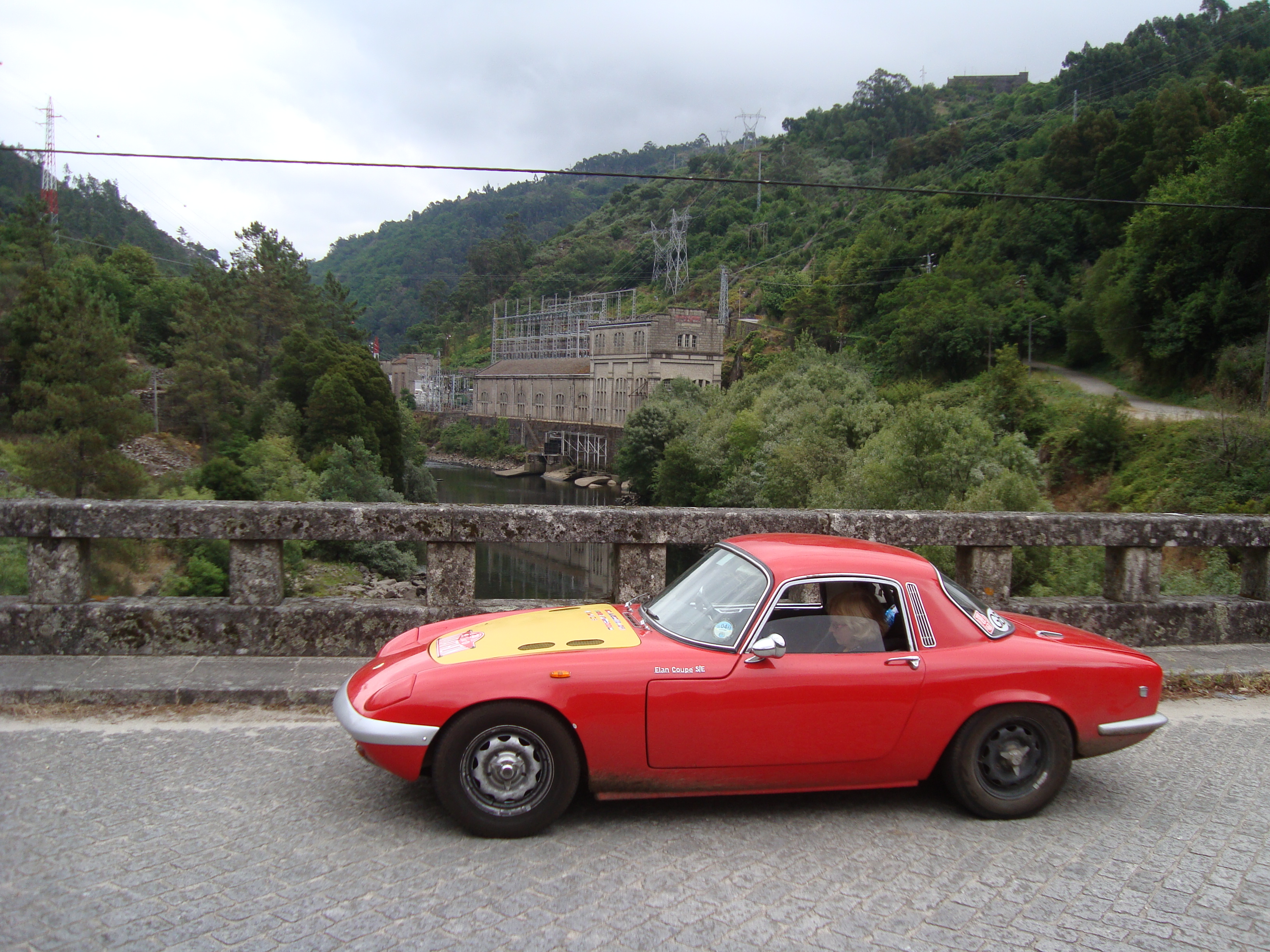 and out of the woods to the high arid plains where we spent most of the day at an altitude of over 1000m. At the overnight hotel another cylinder head was off – this time from an Alfa – but he did finish! We felt the need to check our diff oil level but all was well.
The third day includes what the organisers describe as “exploring interesting farm lanes”. 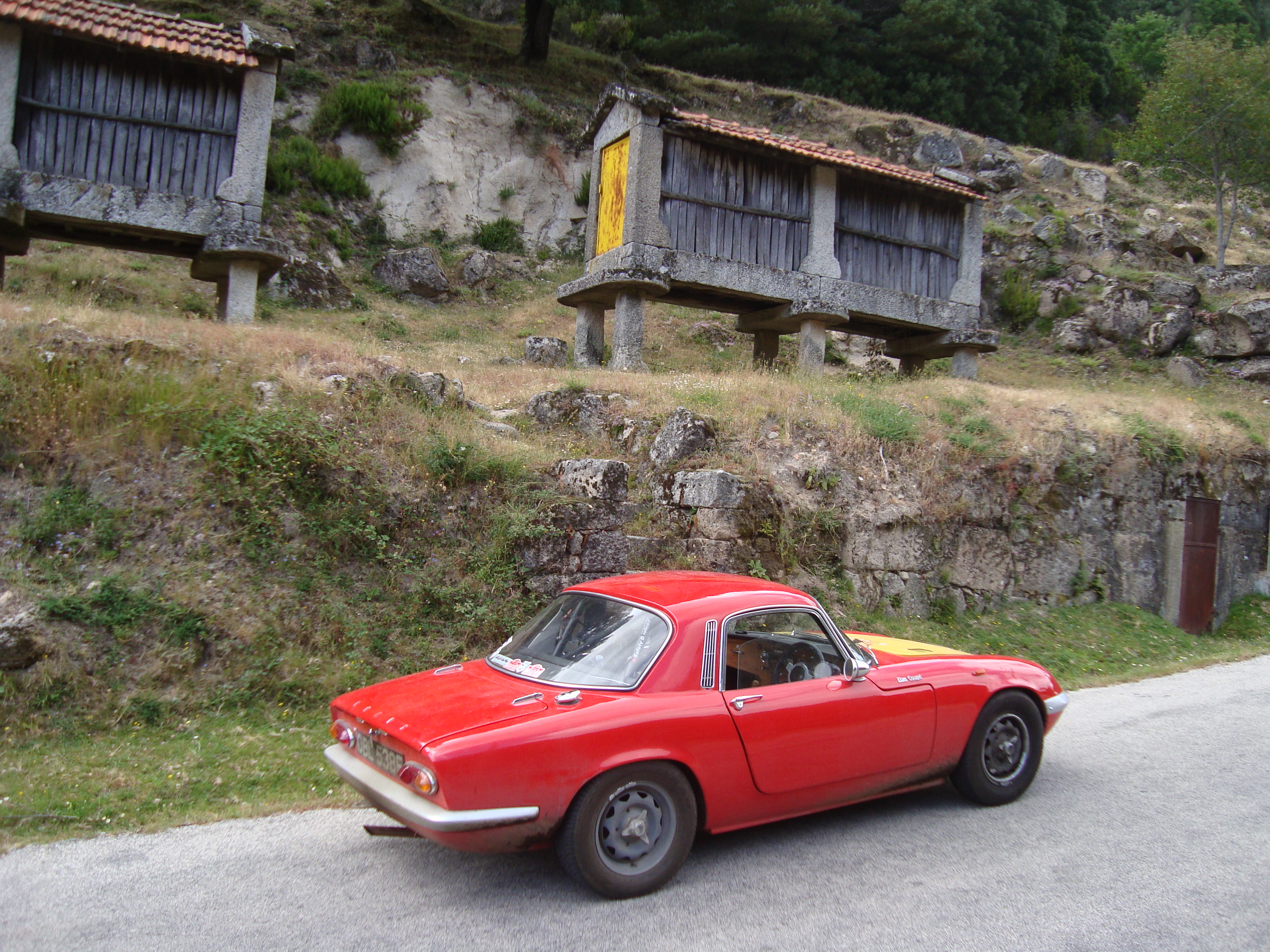 Translated this means they are narrow winding lanes with lots of unlikely turns which you should go down and plenty of more likely looking turns you should not! The last regularity of the day saw cars flying in all directions and having got to the first (of 3) controls fairly respectably we lost the plot (and the route). Having given up all hope and heading straight to the hotel we saw three rally cars stream across our path at a junction and followed them to the final control.

Our hotel was another Parador – a chain of hotels in magnificent old buildings – this one at the monastery of St Estevo which dates from the 7th century and boasts three cloisters, sturdy granite stairs and an idyllic location on the tree covered slopes of the Sil valley. What better place to replace our points which were yet again playing up? We thought this problem was cracked when we replaced the distributor and had 6,500 trouble free miles in Patagonia – it seems not.
Day 4 included a forest fire but before that we passed a crashed BMW (went straight ahead when the road bent to the right) and saw the Atlantic Ocean. Lunches were a feature of this rally with far more than we wanted to eat; the hour’s break is meant to bring a calming civilisation to the crews but we just wanted a pitstop and off!  This was in a luxury hotel with shaded gardens and tranquil lakes – just the place to savour the wine which accompanied every meal – except that Spanish drink drive laws are very strict! The evening’s task was the remove the sump guard to fix the vacuuum T piece which had split giving no headlights, reduced power and too much unfiltered air into the engine.
Next day was not good! The car really didn’t like the “special tests” which the organisers arranged – generally a couple of laps round a karting circuit. This test included a “stop in the box” halfway round. The car stopped fine, stalled and had to be pushed away so we missed the second lap completely and got maximum time penalties for the incomplete first lap. The mechanics arrived, poked and prodded – and she started quite happily without any problem. This cost us 7 minutes, one place and a class medal (ok it would only have been third!) and we ended up as the only car which finished and did not receive a trophy.
 The last day ended with a hillclimb regularity up to an altitude of 1570m and a number of hot and bothered cars, including the Elan which again decided that after stalling on the finish line it was going to chose its own time to restart. The rally was just over 2000km – but we were only part through our trip as we wanted to visit Portugal – deciding that Evora was too far away………..
Our first stop was Braganza where we visited the old walled town and castle. Leaving town next morning we wanted a photo-opportunity outside the castle – and found the local car  club were having their summer Meet & BBQ there – not sure who was most surprised when we rolled up! We knew we had a long day ahead so did not stay; the day turned out to be longer than expected with the roads much slower and roadworks occupying most of the motorway.
After the warmth of Braganza we found rain and cloud at the start of our tour round the port wine region of the Douro valley. The day brightened up and glorious sunshine accompanied our drive round the wine terraces. Our next stop was Porto where we found the signposting even worse than we had experienced so far and the driving standard awful with no leeway being granted to a car that was clearly old and lost.
Leaving the city we headed for the hills and the iron age city at Briteiros followed by the religious extravaganza at Bom Jesus where to our great surprise we bumped into Andrew and Sarah in the Porsche 914 from the rally – if we’d arranged to meet them here we’d certainly have failed!
Bom Jesus is more or less replicated in the nearby Santuario de Sierra da Pineda and one can but wonder at the effort spent on creating these edifices. We left Portugal in the direction of Ourense and this time were able to take some pictures of the countryside as we reached what had been rally territory. Although most definitely not a race there was little time to spare on this rally and we took many fewer photos than usual.
A long drive along the motorways past Leon brought us closer to the coast when another problem arrived – stopping for petrol the starter motor ground slowly round and the car just started. Surely the battery hadn’t failed? Thoughts turned to the regulator box but it seemed to be operating correctly and the contacts were moving as the engine revs rose. I had a spare but was reluctant to swop them over. We stopped at an expensive hotel with private parking and found the culprit – the starter motor end plate had come loose with 3 of 4 screws missing. I don’t carry spare screws but fortunately the bolts from the large size “chocolate blocks” were a good enough match – starter motor purred!
Albania 2002
Why are we doing this?
A report on the 2002 World Cup Rally
London – Dubrovnik – Albania – Athens
We have never been rallying before but the 2001 London – Sahara – London rally sounded interesting and we thought we would try it out. First step was a weekend practice (in a Mercedes 300TD!) in Northern France and Belgium. This was entirely on tarmac and seemed pretty straightforward, no racing, just navigation and a few timed sections where the challenge was to drive at exactly 27.5 mph. I could not do that (ok I can when its speed cameras on the M11!) so Allison drove and I navigated.
The organisers then sent us the prospectus for the 2002 World Cup but were not happy that we entered our 1967 Lotus Elan S3 – we haven’t got a modern car under 1400cc so the Classics section seemed the answer and the Elan the only car we have that fits the class.
“No Lotus has ever finished any of our rallies”, “Of all the cars you could have chosen, this requires more preparation than any other”, “We only have two backup trucks, they can’t spend all their time looking after you”.
So it’s a challenge!
The target was to drive over “rough tarmac and smooth gravel” the 3000 miles to Athens (and 1500 back, just to make sure it wasn’t too easy!). Our route would take us over parts of the Acropolis rally stages in Greece, an alpine hill climb in Austria, sundry unmarked (on our maps) forest tracks in Slovenia and Croatia and then there was Albania!
To put months of preparation and discussion in one paragraph, I had to fit a sump guard, a trip meter, full harness seat belts, a roll cage, sort out the cooling system and most importantly lift the rear of the car by about 3 inches. The car had to be in top condition and we had to carry all the tools, spares and tyres that we might (or might not) need. Then there was the small matter of two adults plus maps and the odd piece of clothing for 12 days there and however many days back.
The sump guard was made from 1/4 inch aluminium by the son-in-law of one of the back-up crews and extended from the air intake at the front to behind the gearbox. The front mountings were solid but the rear one was weak and suffered on the rough stages when the guard knocked the exhaust and broke the welds on the down pipe.
The rear suspension required negotiation, Rally regulations were “Showroom standard” but they were sympathetic to the plight of our silencer (well dented when the springs fail to do the job) and we were allowed adjustable suspension. This was designed by Pat Thomas using Plus 2 springs – far stronger than the feeble Elan version now available – with a threaded section on the struts to carry the lower mounting plate. Rally HQ suggested 165*16 6ply van tyres in place of our Uniroyal 145*16, which may be good at holding the road but have zero tolerance to sharp objects and rejoice in punctures!
We have owned the car since 1974 and I reckon to have a personal acquaintance with every nut and bolt! The chassis was replaced in 1993 and the engine rebored in 1995 with an unleaded conversion in 2001. We had not modified anything, so ignition, dynamo and oil pump are all original. For the rally we replaced all wheel bearings, brake fluid, discs & pads (competition on the front) and the radiator – it still had the original one and we knew from past experience that it had an aversion to the Alps and that was without a hill climb!
Rally regs advised taking 6 tyres all of which had to be marked, if you used extra unmarked tyres there were penalties. Weight and space were at a premium so we took 5 rims and stuffed the 6th tyre with all our spares. One of the back up crews suggested a list, mainly kits, seals, plugs & points etc and bearings but add in a couple of donuts and bolts – it gets heavy!
No expedition is complete without a last minute panic and in our case it was the oil pressure. This was potentially terminal and I tried to persuade myself it was the oil pump. A few phone calls revealed that I did not want it to be that – a new style oil pump and filter system with an hour before the off and the nearest spare 200 miles away was not a good idea! “Change your oil” I was told, so I threw away a sump full of brand new Castrol GTX and filled up with Duckhams 20/50. The oil pressure was steady for the whole rally and yet we’ve used GTX for years…..don’t ask, I can’t explain.
The rally started at Blenheim Palace where each car was set on a podium for the driver to be interviewed before screeching away across the once pristine tarmac. “Why are you entering such an unsuitable car” he asked Allison. “Its my husband” she replied – not sure whether that makes the car or the husband unsuitable; but I was more concerned with smoke drifting up from the cigar lighter and getting our time card clocked by the marshal. Fortunately both smoke and marshal vanished and we were off.
They did not expect us to get to Austria; in fact the Organiser was quoted as saying we would not get through France. This may be related to an incident at Dover harbour when I was interviewed with the bonnet up, oil all over the front of the engine, no tickover and the radiator next to boiling. The oil was from the loose timing chain tensioner bolt and the tickover/cooling from a change in fuel mix. I had set the car up on Sainsbury’s best but the last tankfull had been Optimax; the next tankfull was ordinary super unleaded and both tickover and temperature were back to normal. I was surprised both by the car’s intolerance to changes in fuel (in terms of tickover) but at the same time by its tolerance to those changes (in terms of road performance).
The hill climb was straightforward but not that fast – we soon learnt that we had no idea of how to really drive that car! Next morning we did the climb again, from warm bright sunshine to sparkling fresh snow at the top. Then swooping down through Southern Austria with the Elan eating the miles and overtaking at will. Easy this – what’s the problem?
The next stage was gravel; rutted forest tracks with a loose uneven stony surface and ravines across the path. There were hairpin bends and sheer drops – mirrored our speed as the 2CV overtook us! We got maximum penalties. Prior to the checkpoint we were stopped, marshalls in the road, blue flashing lights, it was dusk and another gravel stage was ahead of us. There had been a head-on, two rally cars out and one driver in hospital with punctured lungs. We chickened out and took the main road to Riejka where the band, ready to greet the early arrivals welcomed us with swirling batons and majorettes.
Car casualties came thick and fast. Two cars fell off the stage we missed – one on top of the other and the bottom driver had a broken vertibra. Next day another crash, this time with a local, the navigator broke her neck – though the seriousness of the injury was only spotted two days later by a fellow competitor looking at the x-rays. We continued to achieve maximum penalties on the gravel stages though we never fell below 8th in our class of 16. Dubrovnik was a rest day but with strict parc ferme to reduce the time spent on rebuilding cars. The daily bulletin showed us in a good light “The car-park scene resembled a battlefield, with sumpshields being banged straight, leaking hubs attended to, and surprise, surprise, just a matter of fixing a radiator overflow bottle on the yellow Lotus Elan”
The drive through Yugoslavia took us through deserted villages still showing the signs of the conflict and abandoned fields. One competitor, a policeman who drove aid convoys, told us that we were passing through areas of uncharted minefields. The police knew we were coming and stopped the Elan because we looked as though we ought to be speeding. Their interest in us ceased when a Peugeot 205 came flying along the wrong side of the road. It was mutually agreed that a fine of Euros 150 was excessive and Euros 20 was more appropriate! One Escort driver spent 4 hours in jail after driving straight into the side of the Mayor’s 3 week old Cherokee Jeep – oops!
The Albanian roads had been described as potholes joined together with tarmac but the main hazard was the children. Some stood and waved, some tried to pat the car as it passed by and others threw things at us. Police were out at every junction so zero chance of doing a detour or getting lost. The towns had mud as the main street and everywhere was poor and rundown. The evening highlight was a time trial round the kart-track, shown live on Albanian TV. Returning to the hotel next door to the President’s Palace was fraught, Elan lights are not good, it was raining, there were no streetlights but plenty of potholes and people crossing the road wherever they felt like – I was relieved to get back with no incidents.
The sight of the Chinese steel works with plumes of red/brown smoke drifting down the valley and the mudbath which passed for the main road were pure Tolkien. The Landrovers thought we would vanish into the potholes as they saw the yellow roof tiptoe along, snaking from side to side in an attempt to find a vaguely plausible road surface. More cautious drivers followed us, reckoning if we could get through then so could they!
There was a downpour as we crossed into Greece, we were soaked, the car was soaked and we could have had a bath in the passenger’s footwell. It was dark but somehow the electrics and the wipers kept going – couldn’t see where we were going and if there had been a river beside the road we could not have told them apart!
We opted out of most of the next day. It was more rutted gravel, starting and finishing at the same hotel. We figured that we had committed enough acts of mindless violence on the car and saw no point in doing possible damage when Athens and the END were so close. Cars were still crashing out. A Ford Focus fell off the side of a bridge so the driver phoned his secretary in London to fly out with the spares, everyone (not us as our mobile didn’t do overseas) was phoning their mechanic at home to ask about this squeak or that whine. The Saab 96 replaced all 4 shock absorbers, the Lancia rebuilt his steering and suspension, the 2CV phoned a Greek club member for a steering rack, a mini had smashed his sump and seized the engine, someone rolled off the road – twice!
The road to Delphi was less severe and we did 2 of the 3 stages (the 4th was under 3 metres of water). Our day was marked by the interest the locals showed in the Elan; if there was one car they wanted (and were allowed) to sit in and be photographed beside it was the Elan. The organisers were not convinced that the middle of a stage is the time for a photo opportunity but what the hell, how often are we going to rally an Elan in Greece? That night we used our first and only spare – one spark plug!
And on to Athens. We did all four stages that day, Allison was most chuffed that she managed them all within the maximum time. They had been described as like marbles and certainly steering was shared between the driver (the first half of a turn) and the rear wheels (the second half). More than once we ended up across the road when this 50/50 rule was not followed. We motored from sunny open hillsides to smog and traffic filled Athens. We deserved the cold beer and the greeting at the finish line “You proved my boss wrong”; that car was one of the most reliable on the rally though we drove (mostly) within its and our abilities.
We were 42nd out of 64 overall and 7th of 16 in the Classic section. The organisers’ verdict? “The Lotus Elan has got here with just one door mirror having dropped off and the only breakage is a bonnet catch – truly remarkable”. We shared the award of the “True Grit” trophy for “Outstanding Achievement” as one of the cars least likely to get to the end. Sorry but the photos were in the pre-digital age – we’re working on it!
Iceland 2008
Our Asian trip in March was very gentle on the car so there was just the clutch and the rear shock absorbers to replace before our trip to Iceland. After Immingham we next saw the car in a container in Reykjavik. Our first stop was scrutineering in an MOT station but I still cannot tell you what they looked at or for! The car was put on a lift so the underside of our sumpguard was in full view – they did not test our exhaust or brakes or lights or horn or suspension – maybe the clean chassis convinced them that all was as it should be!
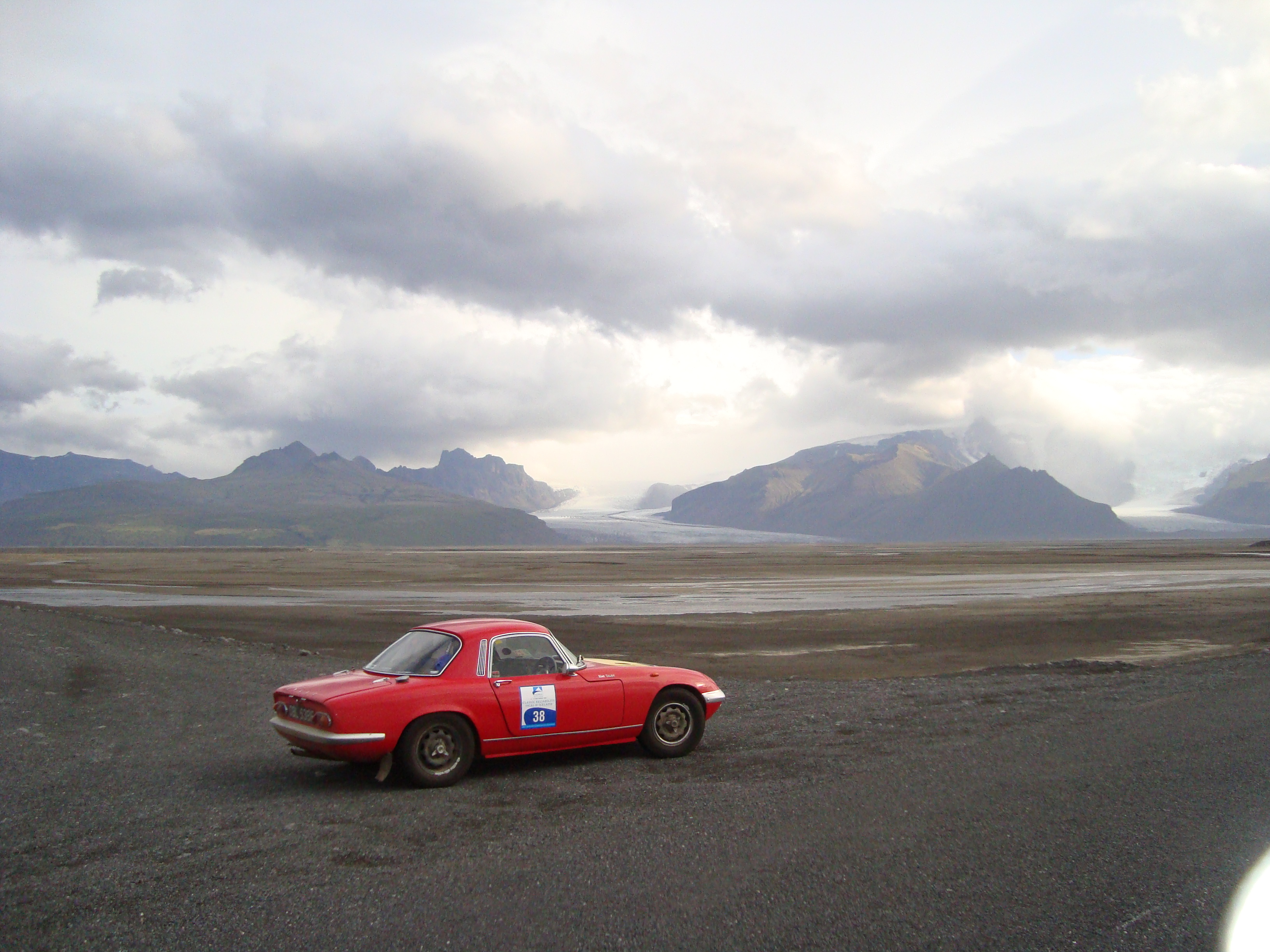
Ahead of us was just over 1250 miles of tarmac and gravel, uphill and downdale. The temperature was around 12 degrees, it was windy – and it rained most of the time. The climate was variable with on/off showers (on those days that it was not in “continuous rain” mode) and we had more than our share of cloud. There were 64 cars including David & Rachael’s smart yellow Sprint; the first time our Elan had company and Allison did try to get into their car from time to time as our original Elan is also yellow! The other cars ranged from a 1922 Bentley to a 1981 Lotus Sunbeam and included a red Gilbern; we formed a team but our results “did not trouble the scorers”.
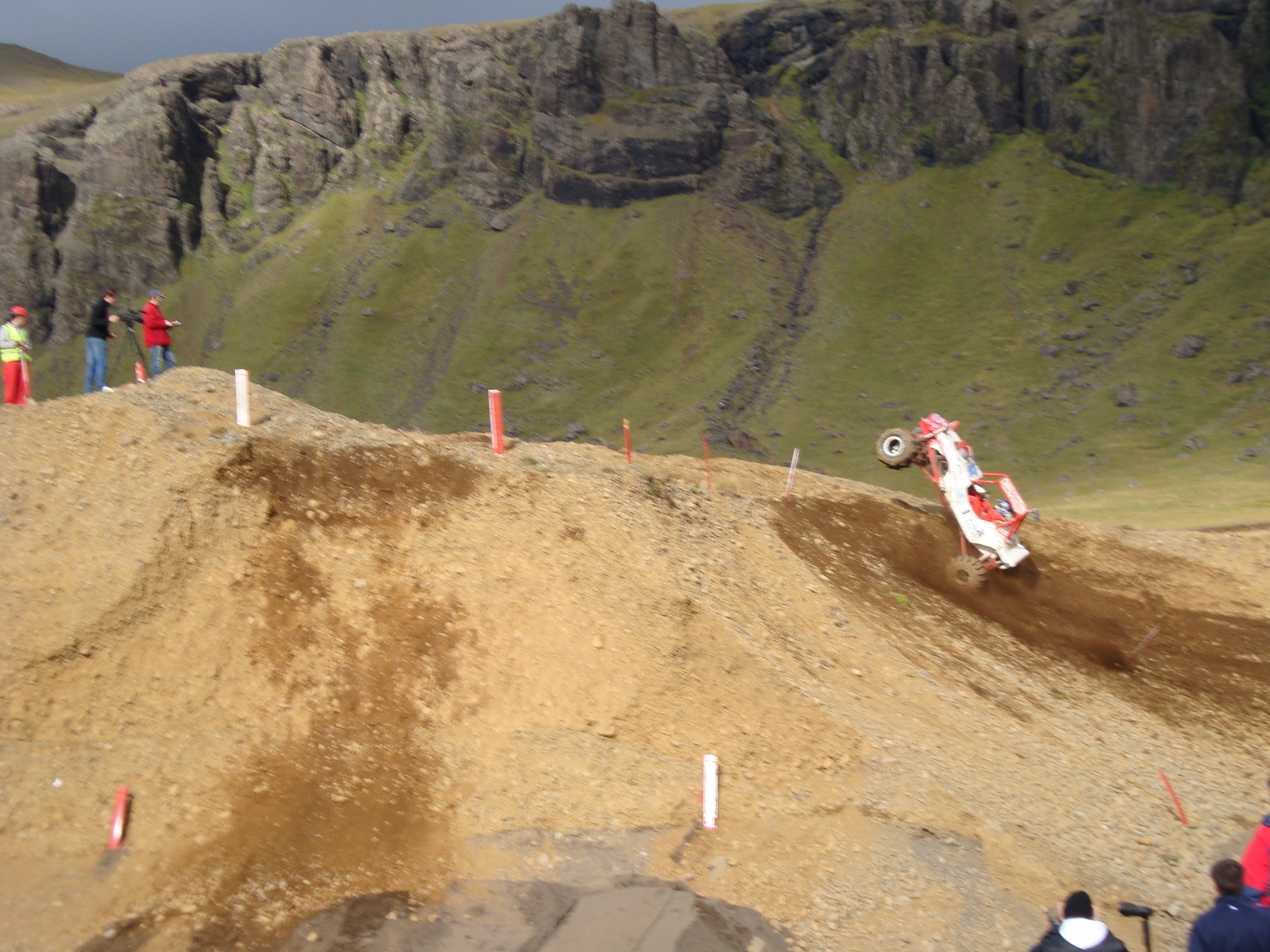
The first day was for preparation so as Iceland is famous for fjords and waterfalls we drove along one to find the other. The car seemed happy enough after a relatively short container journey and so it was as the only work required during the event was to tighten the knock-ons and adjust the handbrake (for the container home). We stopped at a quarry to see the popular Icelandic sport of Cliffhangers where the object is to drive your buggy up and down vertical sides of loose dirt – not for the fainthearted and most definitely not for an Elan!
It was a regularity rally so the format included time controls at the start, middle and end of the day. There were generally 4 “tests” and 4 “regularity” sections. The test was usually a manoeuvre around bollards in a car park against the clock where the main problem was to persuade the driver to go the correct side of each cone (not always successful; which is why we have “this left” to distinguish from “left”). Scoring was based on time difference compared to the fastest car in your class (plus the penalties when “this left” and “left” did not coincide). There were a couple of hill climbs, both in the rain and low cloud where we incurred extra penalties for flying over the finishing line, scattering marshals rather than carefully stopping with the wheels astride it.
The regularity sections were of about 12 miles generally on gravel at specified speeds, which varied from section to section. The object was to arrive at the timing controls (hidden so far as was possible) at the exactly correct time (measured to the second). This sounds easy but our results of juggling stopwatches, trip meters, potholes and hairpin bends suggest there is plenty of room for improvement!
Day one was centred on Reykjavik and started with a trip to Geyser where the hot water bubbles and steams before erupting in a column of steam and spray. Then to another waterfall, ending the day at the Blue Lagoon where you bathe in the hot water inhaling the sulphurous fumes.
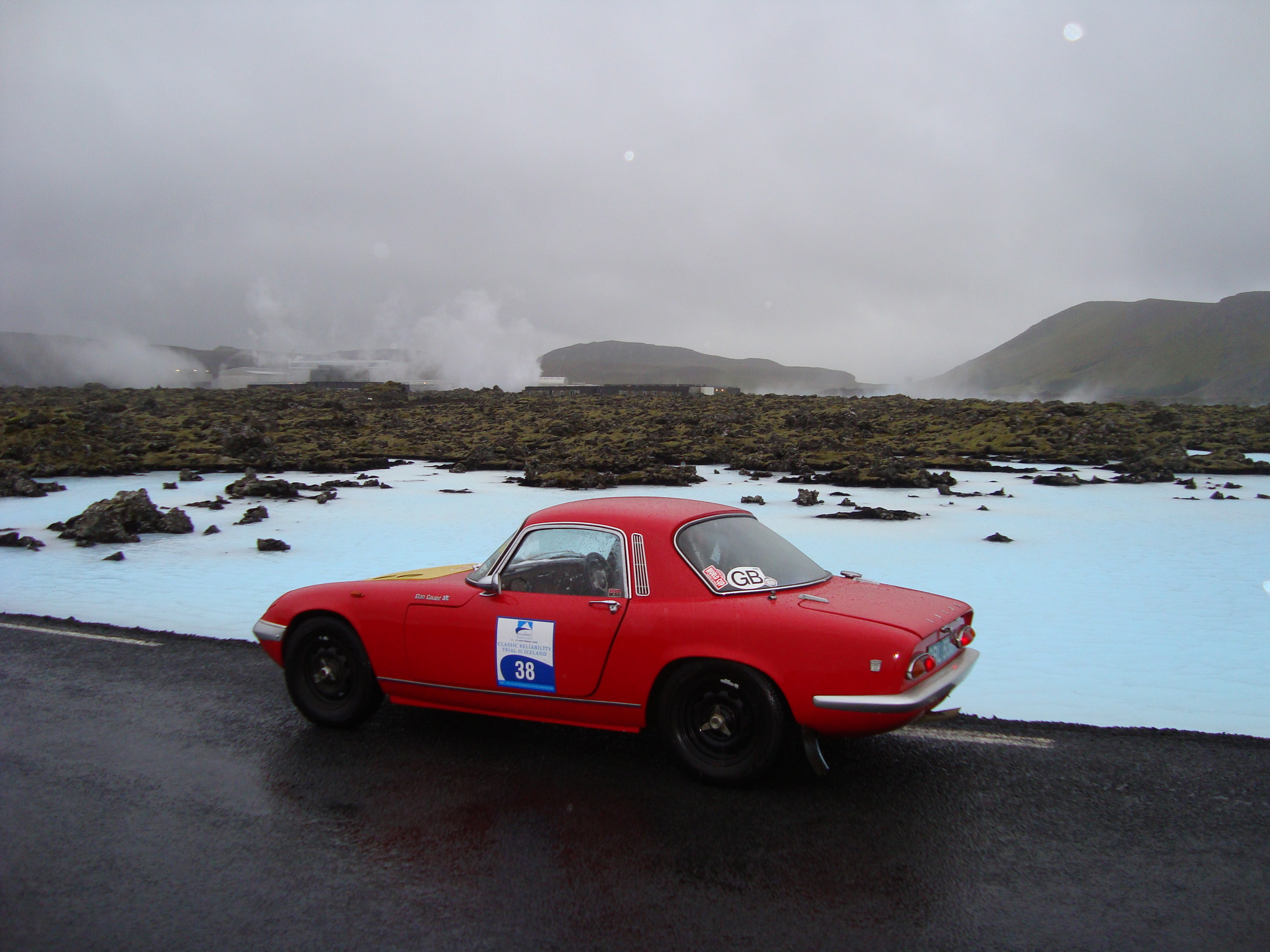
Day two took us along the south coast to Klauster by way of more waterfalls and a motor museum.  Even at this stage cars were struggling mechanically; three dropped out by the end of the rally and electrical problems were frequent causes of delay and anxiety. We ran an old fashioned dynamo; headlights were mandatory at all times, wipers were more on than off and our electrics were A-ok! Who needs alternators?
The rally had aroused excitement amongst the Icelanders as it was the first international event to visit the country. There was sadly only one Icelander – in a Trabant; the first time we’ve encountered one of them in a rally! Our “tests” had been well advertised and there was always a crowd to cheer us on. The Porsche 911 handbrake turns were much applauded – not something an Elan can seriously contemplate!
The southern coastal road was a narrow strip of tarmac through the moss covered lava fields with the sea on our right and the cliffs to our left (“that left”). In the drizzle and low cloud it was not the most exciting scenery; there was little livestock, not much traffic and a maximum speed limit of 56 mph (90km) which the rally were sternly reprimanded for exceeding. Although as the police had only recorded 17 offenders we felt they weren’t really trying.
Day three was a rest day though we still had 200kms to cover between hotels. Our activity was a boat trip on the glacier outfall lake, the iceberg nursery – the location for the car chase scene in the Bond film “You only live Twice”.  Our trip started dry but that soon changed and we were quickly drenched. It got wetter as we headed east for a skidoo ride on the Vatsnajskull glacier.
 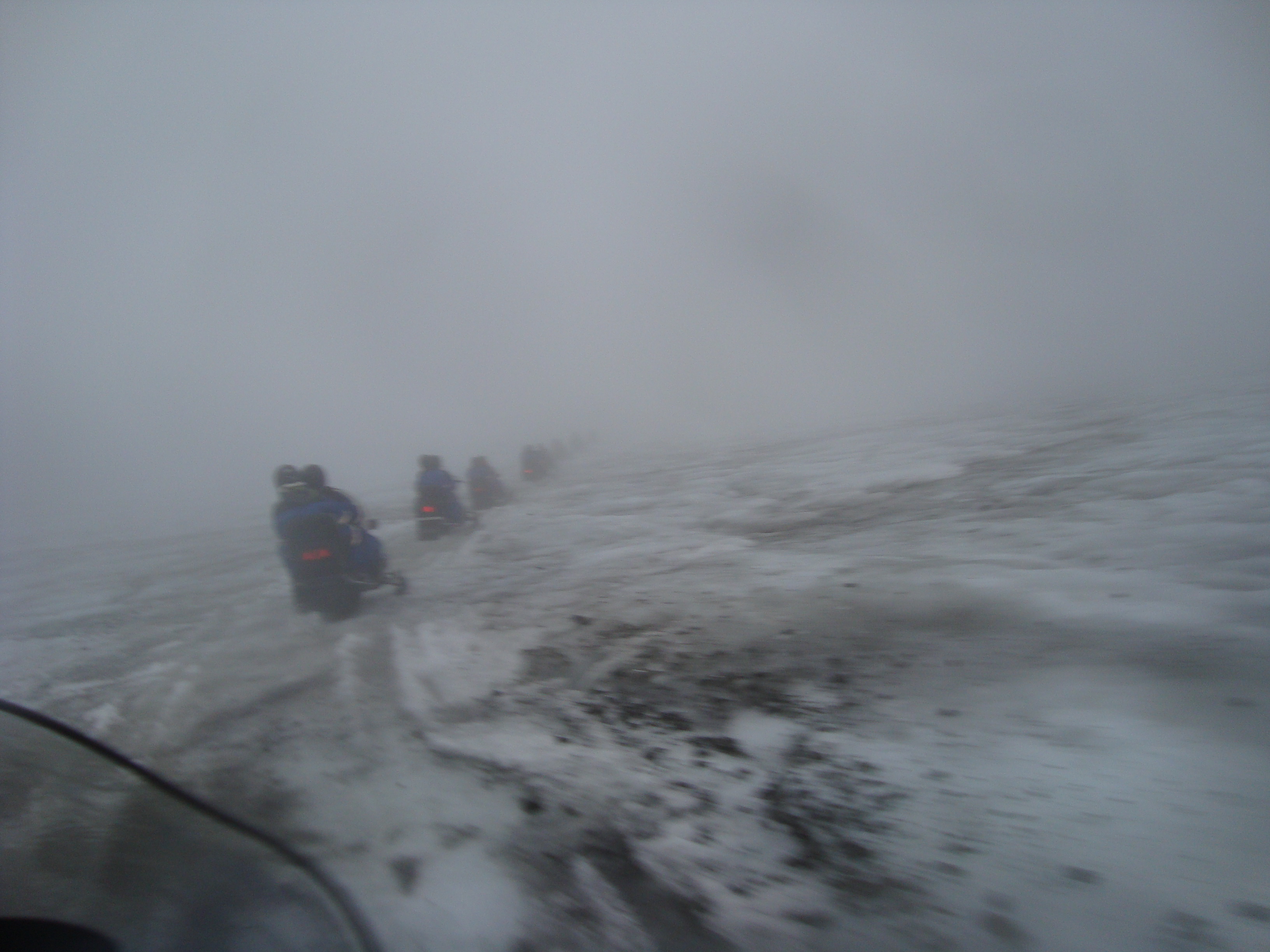 Our journey uphill to the glacier was up a rough potholed track (not in the Elan) which bore remarkable resemblance to a muddy river and with the rain getting heavier we fully expected our Skidoos to be cancelled. But they weren’t so we were kitted out with heavy boots, overalls and helmets – all worn over our own wet weather gear and waterproofs. It was a band of teletubbies who waddled out onto the ice and the waiting skidoo.
The instructions were simple – steering, accelerator and brake (try to avoid) – but nothing about the important issue of how to see where you are going in the sleet with your specs covered in water! Maybe it was just as well that we just followed the line of weaving machines without seeing the rocks and drops which would have terrified us. We got drenched all over again but there was a warm drink and cake waiting in the hotel at the bottom!
The next day started with a wet test in Hofn followed by warnings of an unmarked police speed van a few miles ahead – en route to our next test – a hillclimb! Rejoining the main road, the air was full of the smell of sulphur from the subterranean activity and when the rain temporarily lifted we could see over the black lava sand to the sea.
Timed rallies always result in a bunching of cars and there were six of us in a snake before we were joined by a police car who overtook us – just to make sure. After slithering round more cones in the loose gravel surface of a disused corner of a country airfield our next stop was the smooth tarmac of the Alcoa aluminium plant car park. Here we were provided with tea and refreshments – and the chance to feel dry after a day in almost continuous rain – but we hadn’t finished yet! Our rally was too large for the hotels in the town so we ended up in what would have been a very pretty east coast fishing village where the warm welcome made up for the slow drive through thick clouds on the mountain road. We could hardly see where we were going but below us heavy earthmoving plant was busy doing something. Quite what even the next morning’s daylight couldn’t tell – it just looked like a desolate muddy mess with water everywhere.
By the start of day 5 the driver’s carpet was so wet that there was a cascade of water when we took it out. It carried on dripping as we watched the older Bentleys’ struggle round yet more cones in another car park as they heaved their wheels round the three point turns they needed to complete the course. One day I must solve the leaks which drench both footwells every time it rains.
 The second regularity was cancelled because the road was partly washed away and it was just before lunch that the rain and cloud lifted to reveal more black rock and brown grass. Our next stop was the Krafla Geothermal Power Station where power is generated from the heat underground. Looking down across the valley from the Viti (hell) volcanic crater the two main features were the heat extraction pipes and the clouds of steam rising from the hot water pools and the evil-looking bubbling mud baths.
Day 6 was the last day of the rally as we returned across the northwest corner from Akureyi to Reykjavik.  This was the driest day and we crossed a gentler and lusher landscape with isolated farms and more greenery than before. A fleet of very dirty cars returned to the hotel we had vacated just a few days earlier.
The rally had been hotly contested with unfortunately numerous appeals and queries against time keeping and scoring. We had hoped for an award for not appealing but sadly neither Elan was in the points at the close though we did manage third in class. Both cars had behaved excellently with no mechanical or electrical problems.